






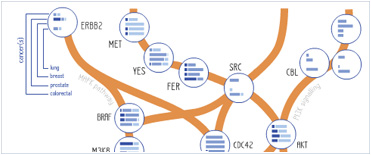








 Foundational characteristics of cancer include proliferation, angiogenesis, migration, evasion of apoptosis, and cellular immortality. Find key markers for these cellular processes and antibodies to detect them.
 The SUMOplot™ Analysis Program predicts and scores sumoylation sites in your protein. SUMOylation is a post-translational modification involved in various cellular processes, such as nuclear-cytosolic transport, transcriptional regulation, apoptosis, protein stability, response to stress, and progression through the cell cycle.
 The Autophagy Receptor Motif Plotter predicts and scores autophagy receptor binding sites in your protein. Identifying proteins connected to this pathway is critical to understanding the role of autophagy in physiological as well as pathological processes such as development, differentiation, neurodegenerative diseases, stress, infection, and cancer.
NCC Antibody
- SPECIFICATION
- CITATIONS
- PROTOCOLS
- BACKGROUND

Application 
| WB, IHC, IEM, ICC |
|---|---|
| Primary Accession | P55018, P55017 |
| Other Accession | NP_062218, NP_000330 |
| Host | Rabbit |
| Reactivity | Human, Mouse, Rat, Dog |
| Clonality | Polyclonal |
| Description | Rabbit Anti-Rat NCC Polyclonal |
| Target/Specificity | Detects ~160kDa. |
| Other Names | SLC12A3 Antibody, SCYL1 Antibody, CKb10 Antibody, MCP-4 Antibody, MGC17134 Antibody, NCC-1 Antibody, NCC1 Antibody, SCYA13 Antibody, CK-beta-10 Antibody, monocyte chemoattractant protein 4 Antibody, monocyte chemotactic protein 4 Antibody, new CC chemokine 1 Antibody, small inducible cytokine A13 Antibody, small inducible cytokine subfamily A (Cys-Cys) member 13 Antibody, chemokine (C-C) Antibody |
| Immunogen | Poduced against a synthetic peptide mapping to a segment of rat NCC (amino acids 74-95), N-terminal |
| Purification | Protein A Purified |
| Storage | -20ºC |
| Storage Buffer | PBS, 50% glycerol, 0.09% sodium azide |
| Shipping Temperature | Blue Ice or 4ºC |
| Certificate of Analysis | 1 µg/ml of SPC-402 was sufficient for detection of NCC3 in 10 µg of rat kidney tissue lysate by colorimetric immunoblot analysis using Goat anti-rabbit IgG:HRP as the secondary antibody. |
| Cellular Localization | Membrane |

Thousands of laboratories across the world have published research that depended on the performance of antibodies from Abcepta to advance their research. Check out links to articles that cite our products in major peer-reviewed journals, organized by research category.
info@abcepta.com, and receive a free "I Love Antibodies" mug.

Provided below are standard protocols that you may find useful for product applications.
Background
NCC, a thiazide-sensitive NaCl co-transporter, is found on the apical membrane of the distal convoluted tubule, where it is the principal mediator of Na+ and Cl- reabsorption in this segment of the nephron. It is activated by phosphorylation, and has been implicated in renal NaCl and K+ homeostasis (1). Regulation of NCC expression and phosphorylation by dietary NACl restriction appears to involve SGK1(1). In experiments with angiotensin II-infused mice, increased sensitivity to Ang II may involved over-activity of NCC (2). Therefore, NCC is the target of thiazide diuretics used in the treatment of hypertension (1). Molecular experiments have also shown that NCC has been detected in the lens cortex, core and fiber cells of a rat (3).
References
1. Vallon V., Schroth J, Lang F, Kuhl D and Uchida S. (2009) Am J Physiol Renal Physiol. 297(3): F704-712.
2. Tiwari S., et al. (2009) Am J Nephrol. 30(6): 554-562.
3. Chee K.N., Vorontsova I., Lim J.C., Kistler J. and Donaldson P.J. (2010) Mol Vis. 16:800-812.

If you have used an Abcepta product and would like to share how it has performed, please click on the "Submit Review" button and provide the requested information. Our staff will examine and post your review and contact you if needed.
If you have any additional inquiries please email technical services at tech@abcepta.com.

Ordering Information
Other Products
Shipping Information