






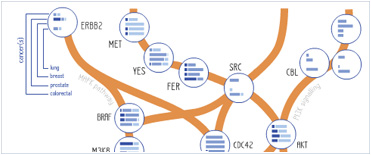








 Foundational characteristics of cancer include proliferation, angiogenesis, migration, evasion of apoptosis, and cellular immortality. Find key markers for these cellular processes and antibodies to detect them.
 The SUMOplot™ Analysis Program predicts and scores sumoylation sites in your protein. SUMOylation is a post-translational modification involved in various cellular processes, such as nuclear-cytosolic transport, transcriptional regulation, apoptosis, protein stability, response to stress, and progression through the cell cycle.
 The Autophagy Receptor Motif Plotter predicts and scores autophagy receptor binding sites in your protein. Identifying proteins connected to this pathway is critical to understanding the role of autophagy in physiological as well as pathological processes such as development, differentiation, neurodegenerative diseases, stress, infection, and cancer.
FGF-21, murine recombinant protein
FGF21, Fibroblast growth factor 21, FGFL
- SPECIFICATION
- CITATIONS
- PROTOCOLS
- BACKGROUND
| Primary Accession | Q9JJN1 |
|---|---|
| Calculated MW | 20.1 kDa |
| Gene ID | 56636 |
|---|---|
| Gene Symbol | FGF-21 |
| Other Names | FGF21, Fibroblast growth factor 21, FGFL, UNQ3115/PRO10196 |
| Gene Source | Mouse |
| Source | E. coli |
| Assay&Purity | SDS-PAGE; ≥95% |
| Assay2&Purity2 | HPLC; ≥95% |
| Recombinant | Yes |
| Sequence | MAYPIPDSSPLLQFGGQVRQRYLYTDDDQDTEAHLEIREDGTVVGAAHRSPESLLELKALKPGVIQILGVKASRFLCQQPDGALYGSPHFDPEACSFRELLLEDGYNVYQSEAHGLPLRLPQKDSPNQDATSWGPVRFLPMPGLLHEPQDQAGFLPPEPPDVGSSDPLSMVEPLQGRSPSYAS |
| Target/Specificity | FGF-21 |
| Application Notes | Centrifuge the vial prior to opening. Reconstitute in sterile H₂O to a concentration ≥ 100 µg/ml. This solution can then be diluted into other aqueous buffers. |
| Format | Lyophilized protein |
| Storage | -20°C; Lyophilized from filtered (0.4 mm) solution containing 20 mM Tris, pH 7.4 and 20 mM NaCl |

Thousands of laboratories across the world have published research that depended on the performance of antibodies from Abcepta to advance their research. Check out links to articles that cite our products in major peer-reviewed journals, organized by research category.
info@abcepta.com, and receive a free "I Love Antibodies" mug.

Provided below are standard protocols that you may find useful for product applications.
Background
The FGFs are a family of more than 20 small (~17–26 kDa) secreted peptides. The initial characterization of these proteins focused on their ability to stimulate fibroblast proliferation. FGFs modulate cellular activity via at least 5 distinct subfamilies of high-affinity FGF receptors (FGFRs): FGFR-1, -2, -3, and -4, all with intrinsic tyrosine kinase activity and, except for FGFR-4, multiple splice isoforms, and FGFR-5, which lacks an intracellular kinase domain. There is growing evidence that FGFRs can be important for regulation of glucose and lipid homeostasis. FGFR-2 appears to be a key molecule during pancreatic development and FGFR-4 has been implicated in cholesterol metabolism and bile acid synthesis. FGF-21 is preferentially expressed in liver, but an exact knowledge of FGF-21 bioactivity and its mode of action have been lacking to date. FGF-21 is a potent activator of glucose uptake on adipocytes, protects animals from diet-induced obesity when overexpressed in transgenic mice, and lowers blood glucose and triglyceride levels when therapeutically administered to diabetic rodents. Fibroblast Growth Factor-21 Mouse Recombinant produced in E.Coli is a single, non-glycosylated, polypeptide chain containing 183 amino acids including N-terminal Methionine and having a molecular mass of 20.1 kDa. The amino acid sequence of the recombinant mouse FGF21 is 100% homologous to the amino acid sequence of the mouse FGF21 without signal sequence. The FGF-21 is purified by proprietary chromatographic techniques.
References
Nishimura T.,et al.Biochim. Biophys. Acta 1492:203-206(2000).
Carninci P.,et al.Science 309:1559-1563(2005).
Kharitonenkov A.,et al.J. Clin. Invest. 115:1627-1635(2005).

If you have used an Abcepta product and would like to share how it has performed, please click on the "Submit Review" button and provide the requested information. Our staff will examine and post your review and contact you if needed.
If you have any additional inquiries please email technical services at tech@abcepta.com.

Ordering Information
Shipping Information