












 Foundational characteristics of cancer include proliferation, angiogenesis, migration, evasion of apoptosis, and cellular immortality. Find key markers for these cellular processes and antibodies to detect them.
 The SUMOplot™ Analysis Program predicts and scores sumoylation sites in your protein. SUMOylation is a post-translational modification involved in various cellular processes, such as nuclear-cytosolic transport, transcriptional regulation, apoptosis, protein stability, response to stress, and progression through the cell cycle.
 The Autophagy Receptor Motif Plotter predicts and scores autophagy receptor binding sites in your protein. Identifying proteins connected to this pathway is critical to understanding the role of autophagy in physiological as well as pathological processes such as development, differentiation, neurodegenerative diseases, stress, infection, and cancer.
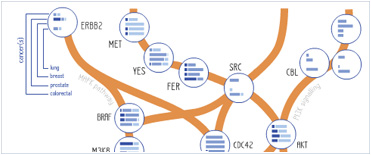
Interactive Notch Signaling Pathway
 Click on any interested protein or antibody ID in the Notch Signaling pathway to list relevant products below.
The Notch signaling pathway is an evolutionarily conserved pathway operating in multicellular organisms. This pathway plays a significant role in cell differentiation during embryonic development and maintenance of adult tissue homeostasis. Notch receptors are single-pass transmembrane proteins that bind in calcium-dependent, non-covalent interactions with Notch proteins to activate signaling. This pathway is of enduring interest to pharmaceutical researchers due to its regulatory effects on neurological, cell growth, and cardiovascular systems related to human diseases. Notch signaling promotes cellular proliferation during neurogenesis, and is inhibited by the protein Numb to promote neural differentiation. Key mutations in Notch receptors leader to deposition of proteins common in leukemias and lymphomas, and both Notch receptor and ligand mutations have been tied to disorders including Aagille syndrome and pathologies of the cerebral arteries.
