






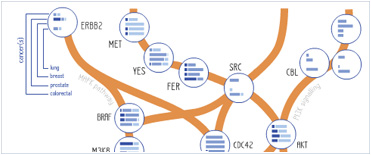








 Foundational characteristics of cancer include proliferation, angiogenesis, migration, evasion of apoptosis, and cellular immortality. Find key markers for these cellular processes and antibodies to detect them.
 The SUMOplot™ Analysis Program predicts and scores sumoylation sites in your protein. SUMOylation is a post-translational modification involved in various cellular processes, such as nuclear-cytosolic transport, transcriptional regulation, apoptosis, protein stability, response to stress, and progression through the cell cycle.
 The Autophagy Receptor Motif Plotter predicts and scores autophagy receptor binding sites in your protein. Identifying proteins connected to this pathway is critical to understanding the role of autophagy in physiological as well as pathological processes such as development, differentiation, neurodegenerative diseases, stress, infection, and cancer.
Anti-Visfatin Picoband Antibody
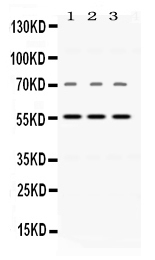
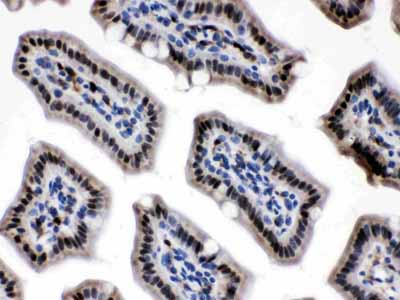
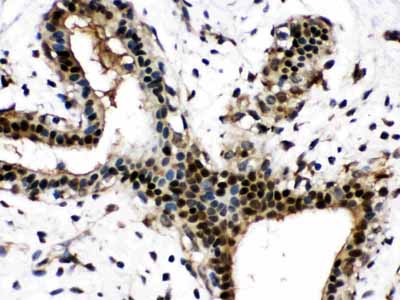
- SPECIFICATION
- CITATIONS
- PROTOCOLS
- BACKGROUND

Application 
| WB, IHC, IHC-P, IF, IC, ICC, E |
|---|---|
| Primary Accession | P43490 |
| Host | Rabbit |
| Reactivity | Human, Mouse, Rat |
| Clonality | Polyclonal |
| Format | Lyophilized |
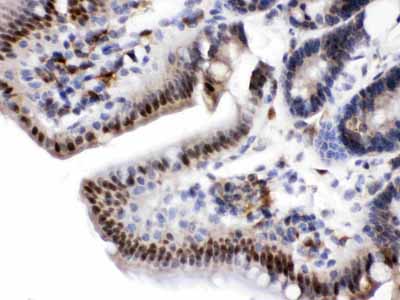
| Description | Rabbit IgG polyclonal antibody for Nicotinamide phosphoribosyltransferase(NAMPT) detection. Tested with WB, IHC-P, ELISA in Human;Mouse;Rat. |
| Reconstitution | Add 0.2ml of distilled water will yield a concentration of 500ug/ml. |
| Gene ID | 10135 |
|---|---|
| Other Names | Nicotinamide phosphoribosyltransferase, NAmPRTase, Nampt, 2.4.2.12, Pre-B-cell colony-enhancing factor 1, Pre-B cell-enhancing factor, Visfatin, NAMPT, PBEF, PBEF1 |
| Calculated MW | 55521 MW KDa |
| Application Details | Immunohistochemistry(Paraffin-embedded Section), 0.5-1 µg/ml, Human, Mouse, Rat, By Heat ELISA , 0.1-0.5 µg/ml, Human, - Western blot, 0.1-0.5 µg/ml, Human, Mouse, Rat |
| Subcellular Localization | Nucleus . Cytoplasm . Secreted . Under non-inflammatory conditions, visfatin predominantly exhibits a granular pattern within the nucleus. Secreted by endothelial cells upon IL-1beta stimulation. Abundantly secreted in milk, reaching 100-fold higher concentrations compared to maternal serum. . |
| Tissue Specificity | Expressed in large amounts in bone marrow, liver tissue, and muscle. Also present in heart, placenta, lung, and kidney tissues. |
| Protein Name | Nicotinamide phosphoribosyltransferase |
| Contents | Each vial contains 5mg BSA, 0.9mg NaCl, 0.2mg Na2HPO4, 0.05mg NaN3. |
| Immunogen | E. coli-derived human Visfatin recombinant protein (Position: L62-N337). Human Visfatin shares 97.1% and 96.7% amino acid (aa) sequence identity with mouse and rat Visfatin, respectively. |
| Purification | Immunogen affinity purified. |
| Cross Reactivity | No cross reactivity with other proteins |
| Storage | At -20˚C for one year. After r˚Constitution, at 4˚C for one month. It˚Can also be aliquotted and stored frozen at -20˚C for a longer time.Avoid repeated freezing and thawing. |
| Name | NAMPT |
|---|---|
| Synonyms | PBEF, PBEF1 |
| Function | Catalyzes the condensation of nicotinamide with 5- phosphoribosyl-1-pyrophosphate to yield nicotinamide mononucleotide, an intermediate in the biosynthesis of NAD. It is the rate limiting component in the mammalian NAD biosynthesis pathway. The secreted form behaves both as a cytokine with immunomodulating properties and an adipokine with anti-diabetic properties, it has no enzymatic activity, partly because of lack of activation by ATP, which has a low level in extracellular space and plasma. Plays a role in the modulation of circadian clock function. NAMPT-dependent oscillatory production of NAD regulates oscillation of clock target gene expression by releasing the core clock component: CLOCK-BMAL1 heterodimer from NAD-dependent SIRT1- mediated suppression (By similarity). |
| Cellular Location | Nucleus. Cytoplasm {ECO:0000250|UniProtKB:Q99KQ4}. Secreted Note=Under non-inflammatory conditions, visfatin predominantly exhibits a granular pattern within the nucleus. Secreted by endothelial cells upon IL-1beta stimulation. Abundantly secreted in milk, reaching 100- fold higher concentrations compared to maternal serum |
| Tissue Location | Expressed in large amounts in bone marrow, liver tissue, and muscle. Also present in heart, placenta, lung, and kidney tissues |

Thousands of laboratories across the world have published research that depended on the performance of antibodies from Abcepta to advance their research. Check out links to articles that cite our products in major peer-reviewed journals, organized by research category.
info@abcepta.com, and receive a free "I Love Antibodies" mug.

Provided below are standard protocols that you may find useful for product applications.
Background
Nicotinamide phosphoribosyltransferase (NAmPRTase or Nampt), also known as pre-B-cell colony-enhancing factor 1 (PBEF1) or visfatin, is an enzyme that in humans is encoded by the PBEF1 gene. This gene encodes a protein that catalyzes the condensation of nicotinamide with 5-phosphoribosyl-1-pyrophosphate to yield nicotinamide mononucleotide, one step in the biosynthesis of nicotinamide adenine dinucleotide. The protein belongs to the nicotinic acid phosphoribosyltransferase (NAPRTase) family and is thought to be involved in many important biological processes, including metabolism, stress response and aging. This gene has a pseudogene on chromosome 10.

If you have used an Abcepta product and would like to share how it has performed, please click on the "Submit Review" button and provide the requested information. Our staff will examine and post your review and contact you if needed.
If you have any additional inquiries please email technical services at tech@abcepta.com.

Ordering Information
Other Products
Shipping Information