






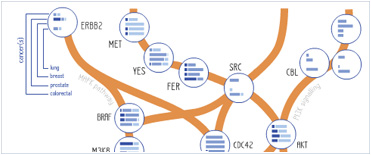








 Foundational characteristics of cancer include proliferation, angiogenesis, migration, evasion of apoptosis, and cellular immortality. Find key markers for these cellular processes and antibodies to detect them.
 The SUMOplot™ Analysis Program predicts and scores sumoylation sites in your protein. SUMOylation is a post-translational modification involved in various cellular processes, such as nuclear-cytosolic transport, transcriptional regulation, apoptosis, protein stability, response to stress, and progression through the cell cycle.
 The Autophagy Receptor Motif Plotter predicts and scores autophagy receptor binding sites in your protein. Identifying proteins connected to this pathway is critical to understanding the role of autophagy in physiological as well as pathological processes such as development, differentiation, neurodegenerative diseases, stress, infection, and cancer.
Anti-IRF3 Antibody Picoband™ (monoclonal, 3B4)


- SPECIFICATION
- CITATIONS
- PROTOCOLS
- BACKGROUND

Application 
| WB, IF, ICC, FC |
|---|---|
| Primary Accession | P70671 |
| Host | Mouse |
| Isotype | Mouse IgG2a |
| Reactivity | Rat, Mouse |
| Clonality | Monoclonal |
| Format | Lyophilized |
| Description | Anti-IRF3 Antibody Picoband™ (monoclonal, 3B4) . Tested in Flow Cytometry, IF, ICC, WB applications. This antibody reacts with Mouse, Rat. |
| Reconstitution | Add 0.2ml of distilled water will yield a concentration of 500ug/ml. |
| Gene ID | 54131 |
|---|---|
| Other Names | Interferon regulatory factor 3, IRF-3, Irf3 |
| Calculated MW | 50-55 kDa |
| Application Details | Western blot, 0.25-0.5 µg/ml, Mouse, Rat Immunocytochemistry/Immunofluorescence, 5 µg/ml, Mouse Flow Cytometry, 1-3 µg/1x10^6 cells, Mouse |
| Contents | Each vial contains 4mg Trehalose, 0.9mg NaCl and 0.2mg Na2HPO4. |
| Clone Names | Clone: 3B4 |
| Immunogen | E.coli-derived mouse IRF3 recombinant protein (Position: M1-I419). |
| Purification | Immunogen affinity purified. |
| Storage | Store at -20˚C for one year from date of receipt. After reconstitution, at 4˚C for one month. It can also be aliquotted and stored frozen at -20˚C for six months. Avoid repeated freeze-thaw cycles. |
| Name | Irf3 |
|---|---|
| Function | Key transcriptional regulator of type I interferon (IFN)- dependent immune responses which plays a critical role in the innate immune response against DNA and RNA viruses (PubMed:15800576). Regulates the transcription of type I IFN genes (IFN-alpha and IFN- beta) and IFN-stimulated genes (ISG) by binding to an interferon- stimulated response element (ISRE) in their promoters (PubMed:15800576). Acts as a more potent activator of the IFN-beta (IFNB) gene than the IFN-alpha (IFNA) gene and plays a critical role in both the early and late phases of the IFNA/B gene induction (PubMed:16846591, PubMed:16979567, PubMed:20049431). Found in an inactive form in the cytoplasm of uninfected cells and following viral infection, double-stranded RNA (dsRNA), or toll-like receptor (TLR) signaling, is phosphorylated by IKBKE and TBK1 kinases (PubMed:16846591, PubMed:16979567, PubMed:20049431). This induces a conformational change, leading to its dimerization and nuclear localization and association with CREB binding protein (CREBBP) to form dsRNA-activated factor 1 (DRAF1), a complex which activates the transcription of the type I IFN and ISG genes (PubMed:16846591, PubMed:16979567, PubMed:20049431). Can activate distinct gene expression programs in macrophages and can induce significant apoptosis in primary macrophages (PubMed:16846591, PubMed:16979567, PubMed:20049431). |
| Cellular Location | Cytoplasm {ECO:0000250|UniProtKB:Q14653}. Nucleus {ECO:0000250|UniProtKB:Q14653}. Mitochondrion {ECO:0000250|UniProtKB:Q14653}. Note=Shuttles between cytoplasmic and nuclear compartments, with export being the prevailing effect. When activated, IRF3 interaction with CREBBP prevents its export to the cytoplasm. Recruited to mitochondria via TOMM70:HSP90AA1 upon Sendai virus infection. {ECO:0000250|UniProtKB:Q14653} |

Thousands of laboratories across the world have published research that depended on the performance of antibodies from Abcepta to advance their research. Check out links to articles that cite our products in major peer-reviewed journals, organized by research category.
info@abcepta.com, and receive a free "I Love Antibodies" mug.

Provided below are standard protocols that you may find useful for product applications.
Background
IRF3 (interferon regulatory factor 3) is a member of the interferon regulatory transcription factor (IRF) family. The IRF3 gene is mapped on 19q13.33. IRF3 is found in an inactive cytoplasmic form that upon serine/threonine phosphorylation forms a complex with CREBBP. IRF3 plays an important role in the innate immune system's response to viral infection. Aggregated MAVS have been found to activate IRF3 dimerization. Although IRF3 increased transcriptional activity from an ISRE-containing promoter, expression of IRF3 as a Gal4 fusion protein did not activate expression of a chloramphenicol acetyltransferase (CAT) reporter gene containing repeats of the Gal4-binding sites. Translocation of IRF3 was accompanied by an increase in serine and threonine phosphorylation. The transcriptional activators CREBBP and EP300 coimmunoprecipitated with IRF3 only subsequent to viral infection, and the authors stated that these are also subunits of DRAF1.

If you have used an Abcepta product and would like to share how it has performed, please click on the "Submit Review" button and provide the requested information. Our staff will examine and post your review and contact you if needed.
If you have any additional inquiries please email technical services at tech@abcepta.com.

Ordering Information
Other Products
Shipping Information