






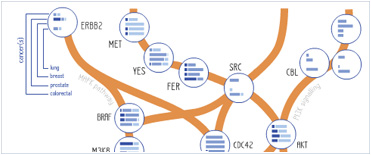








 Foundational characteristics of cancer include proliferation, angiogenesis, migration, evasion of apoptosis, and cellular immortality. Find key markers for these cellular processes and antibodies to detect them.
 The SUMOplot™ Analysis Program predicts and scores sumoylation sites in your protein. SUMOylation is a post-translational modification involved in various cellular processes, such as nuclear-cytosolic transport, transcriptional regulation, apoptosis, protein stability, response to stress, and progression through the cell cycle.
 The Autophagy Receptor Motif Plotter predicts and scores autophagy receptor binding sites in your protein. Identifying proteins connected to this pathway is critical to understanding the role of autophagy in physiological as well as pathological processes such as development, differentiation, neurodegenerative diseases, stress, infection, and cancer.
Anti-Desmocollin-2/3 Antibody
Mouse Monoclonal Antibody

- SPECIFICATION
- CITATIONS
- PROTOCOLS
- BACKGROUND

Application 
| WB, IHC-P, IF, FC |
|---|---|
| Primary Accession | Q02487 |
| Other Accession | 95612 |
| Reactivity | Human, Mouse, Rat |
| Host | Mouse |
| Clonality | Monoclonal |
| Isotype | Mouse / IgG1, kappa |
| Clone Names | 7G6 |
| Calculated MW | 99962 Da |
| Gene ID | 1824 |
|---|---|
| Other Names | ARVD11; Cadherin family member 2; CDHF2; Desmocollin-2; Desmocollin-3; Desmosomal glycoprotein II and III; Desmosomal glycoprotein II; Desmosomal glycoprotein III; DG2; DGII/III; DSC2; DSC3 |
| Application Note | Flow Cytometry (0.5-1ug/million cells); Immunofluorescence (1-2ug/ml); ,Western Blotting (0.5-1.0ug/ml); ,Immunohistology (Formalin-fixed) (1-2ug/ml for 30 minutes at RT),(Staining of formalin-fixed tissues requires boiling tissue sections in 10mM Tris with 1mM EDTA, pH 9.0, for 10-20 min followed by cooling at RT for 20 minutes),Optimal dilution for a specific application should be determined. |
| Format | 200ug/ml of Ab purified from Bioreactor Concentrate by Protein A/G. Prepared in 10mM PBS with 0.05% BSA & 0.05% azide. Also available WITHOUT BSA & azide at 1.0mg/ml. |
| Storage | Store at 2 to 8°C.Antibody is stable for 24 months. |
| Precautions | Anti-Desmocollin-2/3 Antibody is for research use only and not for use in diagnostic or therapeutic procedures. |
| Name | DSC2 (HGNC:3036) |
|---|---|
| Synonyms | CDHF2, DSC3 |
| Function | A component of desmosome cell-cell junctions which are required for positive regulation of cellular adhesion (PubMed:33596089). Promotes timely incorporation of DSG2 into desmosome intercellular junctions and promotes interaction of desmosome cell junctions with intermediate filament cytokeratin, via modulation of DSP phosphorylation (PubMed:33596089). Plays an important role in desmosome-mediated maintenance of intestinal epithelial cell intercellular adhesion strength and barrier function (PubMed:33596089). Positively regulates wound healing of intestinal mucosa via promotion of epithelial cell migration, and also plays a role in mechanotransduction of force between intestinal epithelial cells and extracellular matrix (PubMed:31967937). May contribute to epidermal cell positioning (stratification) by mediating differential adhesiveness between cells that express different isoforms. May promote p38MAPK signaling activation that facilitates keratinocyte migration (By similarity). |
| Cellular Location | Cell membrane; Single-pass type I membrane protein. Cell junction, desmosome |
| Tissue Location | Expressed at intercalated disks in the heart, where it is colocalized with CDH2 (at protein level) (PubMed:23863954, PubMed:33784018). Expressed in intestinal mucosal cells (at protein level) (PubMed:31967937). |

Thousands of laboratories across the world have published research that depended on the performance of antibodies from Abcepta to advance their research. Check out links to articles that cite our products in major peer-reviewed journals, organized by research category.
info@abcepta.com, and receive a free "I Love Antibodies" mug.

Provided below are standard protocols that you may find useful for product applications.
Background
Desmosomes are intercellular adhering junctions that represent cell surface attachment sites for intermediate filament. The desmosome is subdivided into two regions. The plaque region lies adjacent to the plasma, and is believed to contain molecules that attach the intermediate filament cytoskeleton to the desmosome. The core region is composed of transmembrane glycoproteins that are thought to mediate cell-cell adhesion. Desmogleins and desmocollins are the main desmosomal transmembrane proteins. These desmosomal glycoproteins belong to the members of the cadherin family of adhesion molecules. Three different isoforms of both desmogleins and desmocollins have been identified, named as desmoglein 1-3 and desmocollins. Desmosomal cadherins showed differentiation-specific expression in the human epidermis, although the functional significance of this differential expression is not fully understood. Desmocollin-1 can be found in the upper layers. The expression of desmocollin-2 varies in the basal and suprabasal layers. And desmocollin-3 is expressed more evenly throughout the suprabasal layers.

If you have used an Abcepta product and would like to share how it has performed, please click on the "Submit Review" button and provide the requested information. Our staff will examine and post your review and contact you if needed.
If you have any additional inquiries please email technical services at tech@abcepta.com.

Ordering Information
Other Products
Shipping Information