






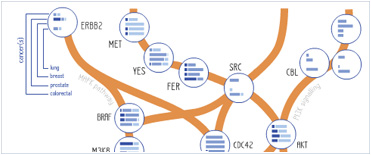








 Foundational characteristics of cancer include proliferation, angiogenesis, migration, evasion of apoptosis, and cellular immortality. Find key markers for these cellular processes and antibodies to detect them.
 The SUMOplot™ Analysis Program predicts and scores sumoylation sites in your protein. SUMOylation is a post-translational modification involved in various cellular processes, such as nuclear-cytosolic transport, transcriptional regulation, apoptosis, protein stability, response to stress, and progression through the cell cycle.
 The Autophagy Receptor Motif Plotter predicts and scores autophagy receptor binding sites in your protein. Identifying proteins connected to this pathway is critical to understanding the role of autophagy in physiological as well as pathological processes such as development, differentiation, neurodegenerative diseases, stress, infection, and cancer.
TRAP1 Antibody (C-term)
Affinity Purified Rabbit Polyclonal Antibody (Pab)
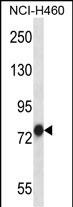
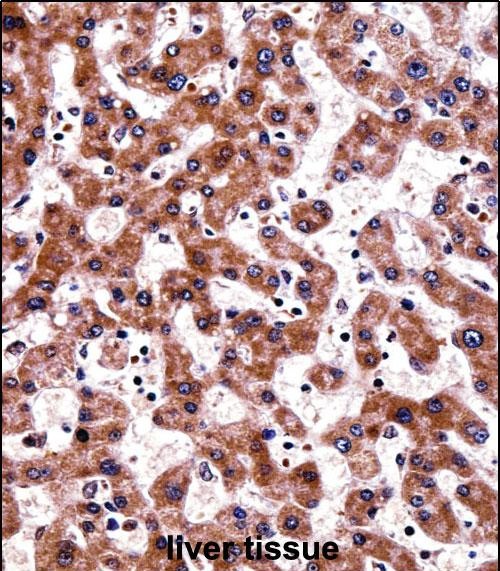
- SPECIFICATION
- CITATIONS
- PROTOCOLS
- BACKGROUND

Application 
| WB, IHC-P, E |
|---|---|
| Primary Accession | Q12931 |
| Other Accession | NP_057376.2 |
| Reactivity | Human |
| Host | Rabbit |
| Clonality | Polyclonal |
| Isotype | Rabbit IgG |
| Calculated MW | 80110 Da |
| Antigen Region | 542-570 aa |
| Gene ID | 10131 |
|---|---|
| Other Names | Heat shock protein 75 kDa, mitochondrial, HSP 75, TNFR-associated protein 1, Tumor necrosis factor type 1 receptor-associated protein, TRAP-1, TRAP1, HSP75 |
| Target/Specificity | This TRAP1 antibody is generated from rabbits immunized with a KLH conjugated synthetic peptide between 542-570 amino acids from the C-terminal region of human TRAP1. |
| Dilution | WB~~1:1000 IHC-P~~1:10~50 E~~Use at an assay dependent concentration. |
| Format | Purified polyclonal antibody supplied in PBS with 0.09% (W/V) sodium azide. This antibody is purified through a protein A column, followed by peptide affinity purification. |
| Storage | Maintain refrigerated at 2-8°C for up to 2 weeks. For long term storage store at -20°C in small aliquots to prevent freeze-thaw cycles. |
| Precautions | TRAP1 Antibody (C-term) is for research use only and not for use in diagnostic or therapeutic procedures. |
| Name | TRAP1 |
|---|---|
| Synonyms | HSP75, HSPC5 {ECO:0000303|PubMed:1866360 |
| Function | Chaperone that expresses an ATPase activity. Involved in maintaining mitochondrial function and polarization, downstream of PINK1 and mitochondrial complex I. Is a negative regulator of mitochondrial respiration able to modulate the balance between oxidative phosphorylation and aerobic glycolysis. The impact of TRAP1 on mitochondrial respiration is probably mediated by modulation of mitochondrial SRC and inhibition of SDHA. |
| Cellular Location | Mitochondrion. Mitochondrion inner membrane Mitochondrion matrix |
| Tissue Location | Found in skeletal muscle, liver, heart, brain, kidney, pancreas, lung, placenta and bladder. Expression is highly reduced in bladder cancer and renal cell carcinoma specimens compared to healthy tissues, but it is increased in other type of tumors |

Thousands of laboratories across the world have published research that depended on the performance of antibodies from Abcepta to advance their research. Check out links to articles that cite our products in major peer-reviewed journals, organized by research category.
info@abcepta.com, and receive a free "I Love Antibodies" mug.

Provided below are standard protocols that you may find useful for product applications.
Background
HSP90 proteins are highly conserved molecular chaperones that have key roles in signal transduction, protein folding, protein degradation, and morphologic evolution. HSP90 proteins normally associate with other cochaperones and play important roles in folding newly synthesized proteins or stabilizing and refolding denatured proteins after stress. TRAP1 is a mitochondrial HSP90 protein. Other HSP90 proteins are found in cytosol (see HSP90AA1; MIM 140571) and endoplasmic reticulum (HSP90B1; MIM 191175) (Chen et al., 2005 [PubMed 16269234]).
References
Liu, D., et al. Cancer Lett. 296(2):194-205(2010)
Bailey, S.D., et al. Diabetes Care 33(10):2250-2253(2010)
Nguyen, M.C., et al. Cancer Immunol. Immunother. 59(9):1313-1323(2010)
Landriscina, M., et al. Cancer Res. 70(16):6577-6586(2010)
Leav, I., et al. Am. J. Pathol. 176(1):393-401(2010)

If you have used an Abcepta product and would like to share how it has performed, please click on the "Submit Review" button and provide the requested information. Our staff will examine and post your review and contact you if needed.
If you have any additional inquiries please email technical services at tech@abcepta.com.

Ordering Information
Other Products
Shipping Information