






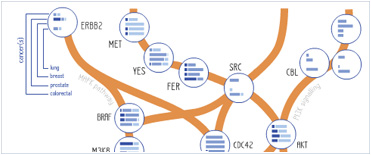






 Foundational characteristics of cancer include proliferation, angiogenesis, migration, evasion of apoptosis, and cellular immortality. Find key markers for these cellular processes and antibodies to detect them.
 The SUMOplot™ Analysis Program predicts and scores sumoylation sites in your protein. SUMOylation is a post-translational modification involved in various cellular processes, such as nuclear-cytosolic transport, transcriptional regulation, apoptosis, protein stability, response to stress, and progression through the cell cycle.
 The Autophagy Receptor Motif Plotter predicts and scores autophagy receptor binding sites in your protein. Identifying proteins connected to this pathway is critical to understanding the role of autophagy in physiological as well as pathological processes such as development, differentiation, neurodegenerative diseases, stress, infection, and cancer.
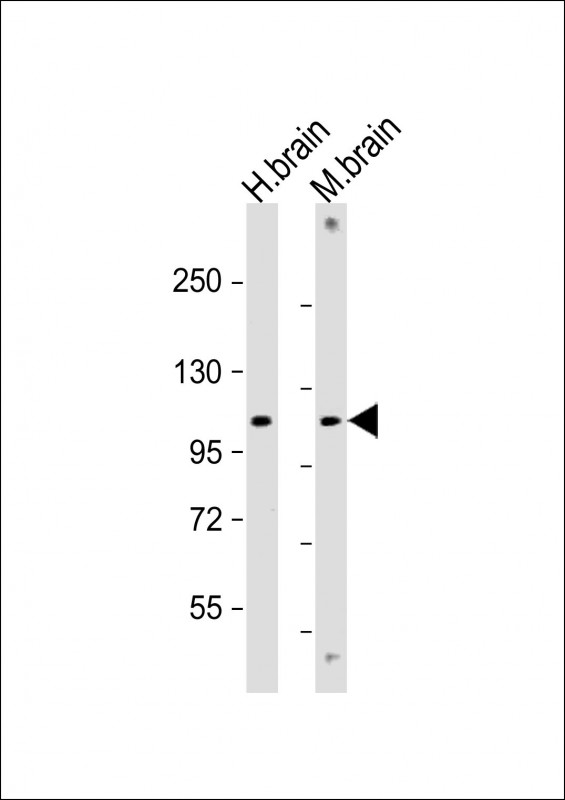
GBA2 Antibody (Center)
Purified Rabbit Polyclonal Antibody (Pab)
- SPECIFICATION
- CITATIONS
- PROTOCOLS
- BACKGROUND

Application 
| WB, E |
|---|---|
| Primary Accession | Q9HCG7 |
| Other Accession | Q69ZF3, Q5M868 |
| Reactivity | Human, Mouse |
| Predicted | Rat |
| Host | Rabbit |
| Clonality | polyclonal |
| Isotype | Rabbit IgG |
| Calculated MW | 104649 Da |
| Antigen Region | 593-623 aa |
| Gene ID | 57704 |
|---|---|
| Other Names | Non-lysosomal glucosylceramidase, NLGase, 3.2.1.45, Beta-glucocerebrosidase 2, Beta-glucosidase 2, Glucosylceramidase 2, GBA2, KIAA1605 |
| Target/Specificity | This GBA2 antibody is generated from a rabbit immunized with a KLH conjugated synthetic peptide between 593-623 amino acids from the Central region of human GBA2. |
| Dilution | WB~~1:2000 E~~Use at an assay dependent concentration. |
| Format | Purified polyclonal antibody supplied in PBS with 0.09% (W/V) sodium azide. This antibody is purified through a protein A column, followed by peptide affinity purification. |
| Storage | Maintain refrigerated at 2-8°C for up to 2 weeks. For long term storage store at -20°C in small aliquots to prevent freeze-thaw cycles. |
| Precautions | GBA2 Antibody (Center) is for research use only and not for use in diagnostic or therapeutic procedures. |
| Name | GBA2 (HGNC:18986) |
|---|---|
| Function | Non-lysosomal glucosylceramidase that catalyzes the hydrolysis of glucosylceramides/GlcCers (such as beta-D-glucosyl- (1<->1')-N-acylsphing-4-enine) to free glucose and ceramides (such as N-acylsphing-4-enine) (PubMed:17105727, PubMed:30308956, PubMed:32144204). GlcCers are membrane glycosphingolipids that have a wide intracellular distribution (By similarity). They are the main precursors of more complex glycosphingolipids that play a role in cellular growth, differentiation, adhesion, signaling, cytoskeletal dynamics and membrane properties (By similarity). Involved in the transglucosylation of cholesterol, transfers glucose from GlcCer to cholesterol, thereby modifying its water solubility and biological properties (PubMed:32144204). Under specific conditions, may catalyze the reverse reaction, transferring glucose from cholesteryl-3-beta-D- glucoside to ceramide (such as N-acylsphing-4-enine) (Probable). May play a role in the metabolism of bile acids (PubMed:11489889, PubMed:17080196, PubMed:9111029). Able to hydrolyze bile acid 3-O- glucosides as well as to produce bile acid-glucose conjugates thanks to a bile acid glucosyl transferase activity (PubMed:11489889, PubMed:17080196, PubMed:9111029). Catalyzes the hydrolysis of galactosylceramides/GalCers (such as beta-D-galactosyl-(1<->1')-N- acylsphing-4-enine), as well as the galactosyl transfer between GalCers and cholesterol in vitro with lower activity compared with their activity against GlcCers (PubMed:32144204). |
| Cellular Location | Endoplasmic reticulum membrane {ECO:0000250|UniProtKB:Q69ZF3}; Peripheral membrane protein; Cytoplasmic side {ECO:0000250|UniProtKB:Q69ZF3}. Golgi apparatus membrane {ECO:0000250|UniProtKB:Q69ZF3}; Peripheral membrane protein; Cytoplasmic side {ECO:0000250|UniProtKB:Q69ZF3}. Note=Localization to the plasma membrane and alternative topologies have also been reported |
| Tissue Location | Widely expressed (PubMed:11489889). Mainly expressed in brain, heart, skeletal muscle, kidney and placenta and expressed at lower levels in liver, spleen, small intestine and lung (PubMed:11489889). Detectable in colon, thymus and peripheral blood leukocytes (PubMed:11489889). |

Thousands of laboratories across the world have published research that depended on the performance of antibodies from Abcepta to advance their research. Check out links to articles that cite our products in major peer-reviewed journals, organized by research category.
info@abcepta.com, and receive a free "I Love Antibodies" mug.

Provided below are standard protocols that you may find useful for product applications.
Background
Non-lysosomal glucosylceramidase that catalyzes the conversion of glucosylceramide (GlcCer) to free glucose and ceramide. Involved in sphingomyelin generation and prevention of glycolipid accumulation. May also catalyze the hydrolysis of bile acid 3-O-glucosides, however, the relevance of such activity is unclear in vivo. Plays a role in central nevous system development. Required for proper formation of motor neuron axons.
References
Matern H.,et al.J. Biol. Chem. 276:37929-37933(2001).
Nagase T.,et al.DNA Res. 7:273-281(2000).
Ota T.,et al.Nat. Genet. 36:40-45(2004).
Bechtel S.,et al.BMC Genomics 8:399-399(2007).
Humphray S.J.,et al.Nature 429:369-374(2004).

If you have used an Abcepta product and would like to share how it has performed, please click on the "Submit Review" button and provide the requested information. Our staff will examine and post your review and contact you if needed.
If you have any additional inquiries please email technical services at tech@abcepta.com.

Ordering Information
Other Products
Shipping Information