







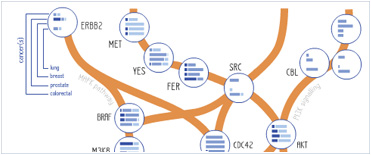








 Foundational characteristics of cancer include proliferation, angiogenesis, migration, evasion of apoptosis, and cellular immortality. Find key markers for these cellular processes and antibodies to detect them.
 The SUMOplot™ Analysis Program predicts and scores sumoylation sites in your protein. SUMOylation is a post-translational modification involved in various cellular processes, such as nuclear-cytosolic transport, transcriptional regulation, apoptosis, protein stability, response to stress, and progression through the cell cycle.
 The Autophagy Receptor Motif Plotter predicts and scores autophagy receptor binding sites in your protein. Identifying proteins connected to this pathway is critical to understanding the role of autophagy in physiological as well as pathological processes such as development, differentiation, neurodegenerative diseases, stress, infection, and cancer.
AMPK gamma 1 Antibody
Purified Rabbit Polyclonal Antibody (Pab)
- SPECIFICATION
- CITATIONS: 1
- PROTOCOLS
- BACKGROUND

Application 
| WB |
|---|---|
| Primary Accession | P54619 |
| Reactivity | Human, Mouse, Rat |
| Host | Rabbit |
| Clonality | Polyclonal |
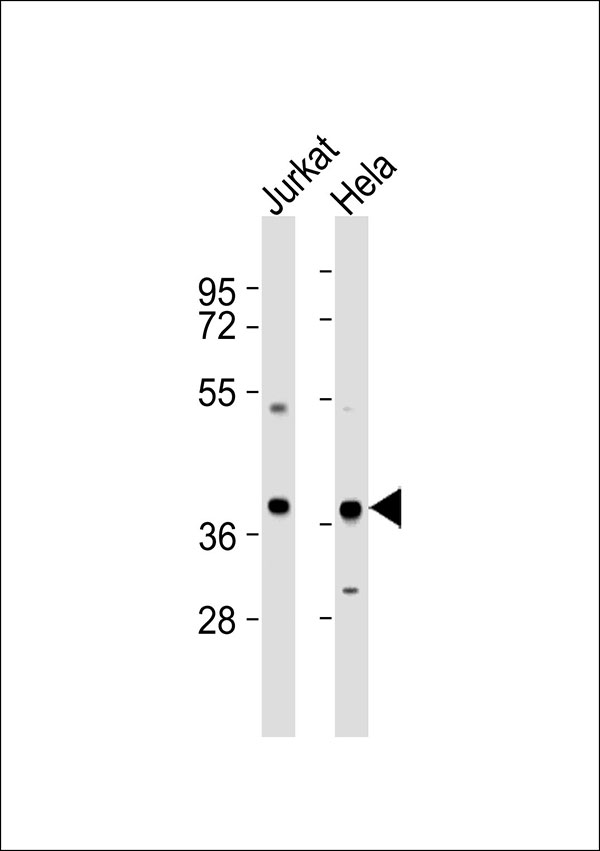
| Calculated MW | 38 KDa |
| Antigen Region | 1 - 60 aa |
| Gene ID | 5571 |
|---|---|
| Other Names | 5'-AMP-activated protein kinase subunit gamma-1, AMPK gamma1, AMPK subunit gamma-1, AMPKg, PRKAG1 |
| Target/Specificity | KLH-conjugated synthetic peptide encompassing a sequence within the N-term region of human AMPK gamma 1. The exact sequence is proprietary. |
| Dilution | WB~~ 1:1000 |
| Format | 0.01M PBS, pH 7.2, 0.09% (W/V) Sodium azide, Glycerol 50% |
| Storage | Store at -20 °C.Stable for 12 months from date of receipt |
| Name | PRKAG1 |
|---|---|
| Function | AMP/ATP-binding subunit of AMP-activated protein kinase (AMPK), an energy sensor protein kinase that plays a key role in regulating cellular energy metabolism (PubMed:21680840, PubMed:24563466). In response to reduction of intracellular ATP levels, AMPK activates energy-producing pathways and inhibits energy-consuming processes: inhibits protein, carbohydrate and lipid biosynthesis, as well as cell growth and proliferation (PubMed:21680840, PubMed:24563466). AMPK acts via direct phosphorylation of metabolic enzymes, and by longer-term effects via phosphorylation of transcription regulators (PubMed:21680840, PubMed:24563466). Also acts as a regulator of cellular polarity by remodeling the actin cytoskeleton; probably by indirectly activating myosin (PubMed:21680840, PubMed:24563466). Gamma non-catalytic subunit mediates binding to AMP, ADP and ATP, leading to activate or inhibit AMPK: AMP-binding results in allosteric activation of alpha catalytic subunit (PRKAA1 or PRKAA2) both by inducing phosphorylation and preventing dephosphorylation of catalytic subunits (PubMed:21680840, PubMed:24563466). ADP also stimulates phosphorylation, without stimulating already phosphorylated catalytic subunit (PubMed:21680840, PubMed:24563466). ATP promotes dephosphorylation of catalytic subunit, rendering the AMPK enzyme inactive (PubMed:21680840, PubMed:24563466). |

Provided below are standard protocols that you may find useful for product applications.
Background
AMP/ATP-binding subunit of AMP-activated protein kinase (AMPK), an energy sensor protein kinase that plays a key role in regulating cellular energy metabolism. In response to reduction of intracellular ATP levels, AMPK activates energy-producing pathways and inhibits energy-consuming processes: inhibits protein, carbohydrate and lipid biosynthesis, as well as cell growth and proliferation. AMPK acts via direct phosphorylation of metabolic enzymes, and by longer-term effects via phosphorylation of transcription regulators. Also acts as a regulator of cellular polarity by remodeling the actin cytoskeleton; probably by indirectly activating myosin. Gamma non-catalytic subunit mediates binding to AMP, ADP and ATP, leading to activate or inhibit AMPK: AMP-binding results in allosteric activation of alpha catalytic subunit (PRKAA1 or PRKAA2) both by inducing phosphorylation and preventing dephosphorylation of catalytic subunits. ADP also stimulates phosphorylation, without stimulating already phosphorylated catalytic subunit. ATP promotes dephosphorylation of catalytic subunit, rendering the AMPK enzyme inactive.
References
Gao G.,et al.J. Biol. Chem. 271:8675-8681(1996).
Kalnine N.,et al.Submitted (MAY-2003) to the EMBL/GenBank/DDBJ databases.
Ota T.,et al.Nat. Genet. 36:40-45(2004).
Scherer S.E.,et al.Nature 440:346-351(2006).
Scott J.W.,et al.J. Clin. Invest. 113:274-284(2004).

If you have used an Abcepta product and would like to share how it has performed, please click on the "Submit Review" button and provide the requested information. Our staff will examine and post your review and contact you if needed.
If you have any additional inquiries please email technical services at tech@abcepta.com.

Ordering Information
Other Products
Shipping Information