






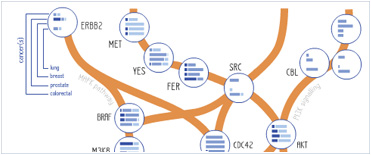








 Foundational characteristics of cancer include proliferation, angiogenesis, migration, evasion of apoptosis, and cellular immortality. Find key markers for these cellular processes and antibodies to detect them.
 The SUMOplot™ Analysis Program predicts and scores sumoylation sites in your protein. SUMOylation is a post-translational modification involved in various cellular processes, such as nuclear-cytosolic transport, transcriptional regulation, apoptosis, protein stability, response to stress, and progression through the cell cycle.
 The Autophagy Receptor Motif Plotter predicts and scores autophagy receptor binding sites in your protein. Identifying proteins connected to this pathway is critical to understanding the role of autophagy in physiological as well as pathological processes such as development, differentiation, neurodegenerative diseases, stress, infection, and cancer.
SCNN1D Polyclonal Antibody
Purified Rabbit Polyclonal Antibody (Pab)
- SPECIFICATION
- CITATIONS
- PROTOCOLS
- BACKGROUND

Application 
| IHC-P, IHC-F, IF, ICC, E |
|---|---|
| Primary Accession | P51172 |
| Reactivity | Rat |
| Host | Rabbit |
| Clonality | Polyclonal |
| Calculated MW | 70 KDa |
| Physical State | Liquid |
| Immunogen | KLH conjugated synthetic peptide derived from human SCNN1D |
| Epitope Specificity | 451-550/638 |
| Isotype | IgG |
| Purity | affinity purified by Protein A |
| Buffer | 0.01M TBS (pH7.4) with 1% BSA, 0.02% Proclin300 and 50% Glycerol. |
| SUBCELLULAR LOCATION | Membrane; multi-pass membrane protein |
| SIMILARITY | Belongs to the glutamate-gated ion channel (TC 1.A.10.1) family. NR2B/GRIN2B subfamily. |
| SUBUNIT | Forms heteromeric channel of a zeta subunit (GRIN1), a epsilon subunit (GRIN2A, GRIN2B, GRIN2C or GRIN2D) and a third subunit (GRIN3A or GRIN3B). Found in a complex with GRIN1 and GRIN3B. Found in a complex with GRIN1, GRIN3A and PPP2CB. Interacts with PDZ domains of INADL and DLG4. Interacts with HIP1 and NETO1 (By similarity). Interacts with MAGI3. Interacts with DAPK1. |
| Important Note | This product as supplied is intended for research use only, not for use in human, therapeutic or diagnostic applications. |
| Background Descriptions | SCNN1D is a subunit of the epithelial sodium channel (ENaC). ENaC has high sodium selectivity, low conductance, and amiloride sensitivity. The epithelial Na(+) channel (ENaC) regulates Na(+) homeostasis in cells and across epithelia; in the kidney, lung and colon it plays an essential role in trans-epithelial sodium and fluid balance. ENaC also mediates aldosterone-dependent sodium re-uptake in the distal nephron of the kidney, thus regulating blood pressure. Four homologous ENaC subunits (alpha, beta, gamma, and delta) have been isolated in mammals. Combination of alpha-, beta-, and gamma-subunits or delta-, beta-, and gamma-subunits forms fully functional channels. A delta subunit can replace the alpha subunit. However, the pharmacology, sensitivity to amiloride, conductance, and ionic selectivity of the delta/beta-gamma channel are different from those of the alpha/beta-gamma channel. |
| Gene ID | 6339 |
|---|---|
| Other Names | Amiloride-sensitive sodium channel subunit delta, Delta-NaCH, Epithelial Na(+) channel subunit delta, Delta-ENaC, ENaCD, Nonvoltage-gated sodium channel 1 subunit delta, SCNED, SCNN1D, DNACH |
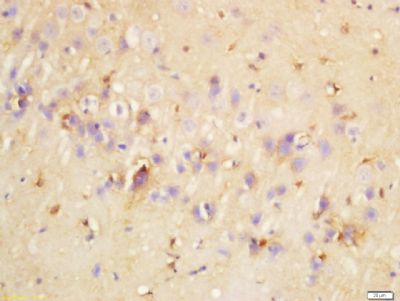
| Target/Specificity | Primarily found in the fronto-parieto-temporal cortex and hippocampus pyramidal cells, lower expression in the basal ganglia. |
| Dilution | IHC-P=1:100-500,IHC-F=1:100-500,ICC=1:100-500,IF=1:100-500,ELISA=1:5000-10000 |
| Storage | Store at -20 ℃ for one year. Avoid repeated freeze/thaw cycles. When reconstituted in sterile pH 7.4 0.01M PBS or diluent of antibody the antibody is stable for at least two weeks at 2-4 ℃. |
| Name | SCNN1D (HGNC:10601) |
|---|---|
| Function | Potential alternative pore-forming subunit of the epithelial sodium channel (ENaC), capable of replacing the alpha/SCNN1A subunit, creating a more active channel with distinct properties (PubMed:16423824, PubMed:19520916, PubMed:22505667). ENaC functions in epithelial tissues, where it facilitates the electrodiffusion of sodium ions from the extracellular fluid through the apical membrane of cells, with water following osmotically, regulating sodium balance and fluid homeostasis (PubMed:16423824, PubMed:19520916, PubMed:7499195). This subunit could also function independently as a sodium channel or assemble into other tissue-specific heterotrimeric sodium channels (PubMed:7499195). |
| Cellular Location | Apical cell membrane; Multi-pass membrane protein |
| Tissue Location | Not specifically expressed in epithelial cells. |
Research Areas
Citations (0)

Thousands of laboratories across the world have published research that depended on the performance of antibodies from Abcepta to advance their research. Check out links to articles that cite our products in major peer-reviewed journals, organized by research category.
Submit your citation using an Abcepta antibody to
info@abcepta.com, and receive a free "I Love Antibodies" mug.
info@abcepta.com, and receive a free "I Love Antibodies" mug.

Application Protocols
Provided below are standard protocols that you may find useful for product applications.

Abcepta welcomes feedback from its customers.
If you have used an Abcepta product and would like to share how it has performed, please click on the "Submit Review" button and provide the requested information. Our staff will examine and post your review and contact you if needed.
If you have any additional inquiries please email technical services at tech@abcepta.com.

$ 385.00
Cat# AP54227
Ordering Information
United States
AlbaniaAustraliaAustriaBelgiumBosnia & HerzegovinaBrazilBulgariaCanadaCentral AmericaChinaCroatiaCyprusCzech RepublicDenmarkEstoniaFinlandFranceGermanyGreeceHong KongHungaryIcelandIndiaIndonesiaIrelandIsraelItalyJapanLatviaLithuaniaLuxembourgMacedoniaMalaysiaMaltaMexicoNetherlandsNew ZealandNorwayPakistanPolandPortugalRomaniaSerbiaSingaporeSlovakiaSloveniaSouth AfricaSouth KoreaSpainSwedenSwitzerlandTaiwanTurkeyUnited KingdomUnited StatesVietnamWorldwideOthers
USA Headquarters
(888) 735-7227 / (858) 622-0099 or (858) 875-1900
Other Products
Shipping Information
Domestic orders (in stock items)
Shipped out the same day. Orders placed after 1 PM (PST) will ship out the next business day.
International orders
Contact your local distributors