






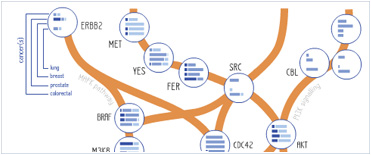







 Foundational characteristics of cancer include proliferation, angiogenesis, migration, evasion of apoptosis, and cellular immortality. Find key markers for these cellular processes and antibodies to detect them.
 The SUMOplot™ Analysis Program predicts and scores sumoylation sites in your protein. SUMOylation is a post-translational modification involved in various cellular processes, such as nuclear-cytosolic transport, transcriptional regulation, apoptosis, protein stability, response to stress, and progression through the cell cycle.
 The Autophagy Receptor Motif Plotter predicts and scores autophagy receptor binding sites in your protein. Identifying proteins connected to this pathway is critical to understanding the role of autophagy in physiological as well as pathological processes such as development, differentiation, neurodegenerative diseases, stress, infection, and cancer.
HOXA1 Polyclonal Antibody
Purified Rabbit Polyclonal Antibody (Pab)
- SPECIFICATION
- CITATIONS
- PROTOCOLS
- BACKGROUND

Application 
| IHC-P, IHC-F, IF, ICC |
|---|---|
| Primary Accession | P49639 |
| Reactivity | Rat, Bovine |
| Host | Rabbit |
| Clonality | Polyclonal |
| Calculated MW | 37 KDa |
| Physical State | Liquid |
| Immunogen | KLH conjugated synthetic peptide derived from human HOXA1 |
| Epitope Specificity | 151-250/335 |
| Isotype | IgG |
| Purity | affinity purified by Protein A |
| Buffer | 0.01M TBS (pH7.4) with 1% BSA, 0.02% Proclin300 and 50% Glycerol. |
| SUBCELLULAR LOCATION | Nucleus. |
| SIMILARITY | Belongs to the Antp homeobox family. Labial subfamily. Contains 1 homeobox DNA-binding domain. |
| DISEASE | Defects in HOXA1 are the cause of Athabaskan brainstem dysgenesis syndrome (ABDS) [MIM:601536]; also known as Narvajo brainstem syndrome. This syndrome is characterized by horizontal gaze palsy, sensorineural deafness, central hypoventilation, and developmental delay. Some patients had swallowing dysfunction, vocal cord paralysis, facial paresis, seizures, and cardiac outflow tract anomalies. Defects in HOXA1 are the cause of Bosley-Salih-Alorainy syndrome (BSAS) [MIM:601536]. Affected individuals show horizontal gaze abnormalities, deafness, facial weakness, vascular malformations of the internal carotid arteries and cardiac outflow trac. Some patients manifest mental retardation and autism spectrum disorder. In contrast to individuals with ABSD, central hypoventilation is not observed in individuals with BSAS. |
| Important Note | This product as supplied is intended for research use only, not for use in human, therapeutic or diagnostic applications. |
| Background Descriptions | Hox genes play a fundamental role in the development of the vertebrate central nervous system, heart, axial skeleton, limbs, gut, urogenital tract and external genitalia. The homeobox gene HoxA1 is transcriptionally regulated by retinoic acid (RA) and encodes a transcription factor which has been shown to play important roles in cell differentiation and embryogenesis. HoxA1 is also expressed in cancers, such as mammary tumors, though it is not expres-sed in normal gland or in precancerous mammary tissues. At embryonic stages, HoxA2 is expressed in the mesenchyme and epithelial cells of the palate, however its expression is restricted to the tips of the growing palatal shelves. HoxA2 protein is predominantly expressed in the nuclei of cells in the ventral mantle region of the developing embryo. In the developing and adult mouse spinal cord, HoxA2 protein may contribute to dorsal-ventral patterning and/or to the specification of neuronal phenotype. HoxA7 functions as a potent transcriptional repressor and its action as such requires several domains, including both activator and repressor regions. HoxA7 is expressed in the fetal liver, lung, skeletal muscle, kidney, pancreas and placenta. |
| Gene ID | 3198 |
|---|---|
| Other Names | Homeobox protein Hox-A1, Homeobox protein Hox-1F, HOXA1, HOX1F |
| Dilution | IHC-P=1:100-500,IHC-F=1:100-500,ICC=1:100-500,IF=1:100-500 |
| Storage | Store at -20 ℃ for one year. Avoid repeated freeze/thaw cycles. When reconstituted in sterile pH 7.4 0.01M PBS or diluent of antibody the antibody is stable for at least two weeks at 2-4 ℃. |
| Name | HOXA1 |
|---|---|
| Synonyms | HOX1F |
| Function | Sequence-specific transcription factor (By similarity). Regulates multiple developmental processes including brainstem, inner and outer ear, abducens nerve and cardiovascular development and morphogenesis as well as cognition and behavior (PubMed:16155570). Also part of a developmental regulatory system that provides cells with specific positional identities on the anterior-posterior axis. Acts on the anterior body structures. Seems to act in the maintenance and/or generation of hindbrain segments (By similarity). Activates transcription in the presence of PBX1A and PKNOX1 (By similarity). |
| Cellular Location | Nucleus {ECO:0000250|UniProtKB:P09022}. |
Citations (0)

Thousands of laboratories across the world have published research that depended on the performance of antibodies from Abcepta to advance their research. Check out links to articles that cite our products in major peer-reviewed journals, organized by research category.
Submit your citation using an Abcepta antibody to
info@abcepta.com, and receive a free "I Love Antibodies" mug.
info@abcepta.com, and receive a free "I Love Antibodies" mug.

Application Protocols
Provided below are standard protocols that you may find useful for product applications.

Abcepta welcomes feedback from its customers.
If you have used an Abcepta product and would like to share how it has performed, please click on the "Submit Review" button and provide the requested information. Our staff will examine and post your review and contact you if needed.
If you have any additional inquiries please email technical services at tech@abcepta.com.

$ 385.00
Cat# AP56670
Ordering Information
United States
AlbaniaAustraliaAustriaBelgiumBosnia & HerzegovinaBrazilBulgariaCanadaCentral AmericaChinaCroatiaCyprusCzech RepublicDenmarkEstoniaFinlandFranceGermanyGreeceHong KongHungaryIcelandIndiaIndonesiaIrelandIsraelItalyJapanLatviaLithuaniaLuxembourgMacedoniaMalaysiaMaltaMexicoNetherlandsNew ZealandNorwayPakistanPolandPortugalRomaniaSerbiaSingaporeSlovakiaSloveniaSouth AfricaSouth KoreaSpainSwedenSwitzerlandTaiwanTurkeyUnited KingdomUnited StatesVietnamWorldwideOthers
USA Headquarters
(888) 735-7227 / (858) 622-0099 or (858) 875-1900
Other Products
Shipping Information
Domestic orders (in stock items)
Shipped out the same day. Orders placed after 1 PM (PST) will ship out the next business day.
International orders
Contact your local distributors