






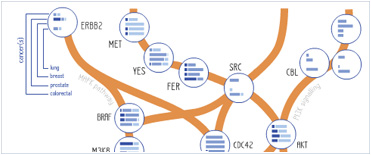






 Foundational characteristics of cancer include proliferation, angiogenesis, migration, evasion of apoptosis, and cellular immortality. Find key markers for these cellular processes and antibodies to detect them.
 The SUMOplot™ Analysis Program predicts and scores sumoylation sites in your protein. SUMOylation is a post-translational modification involved in various cellular processes, such as nuclear-cytosolic transport, transcriptional regulation, apoptosis, protein stability, response to stress, and progression through the cell cycle.
 The Autophagy Receptor Motif Plotter predicts and scores autophagy receptor binding sites in your protein. Identifying proteins connected to this pathway is critical to understanding the role of autophagy in physiological as well as pathological processes such as development, differentiation, neurodegenerative diseases, stress, infection, and cancer.
SCN1B Polyclonal Antibody
Purified Rabbit Polyclonal Antibody (Pab)
- SPECIFICATION
- CITATIONS
- PROTOCOLS
- BACKGROUND

Application 
| IHC-P, IHC-F, IF, E |
|---|---|
| Primary Accession | Q07699 |
| Reactivity | Rat |
| Host | Rabbit |
| Clonality | Polyclonal |
| Calculated MW | 22 KDa |
| Physical State | Liquid |
| Immunogen | KLH conjugated synthetic peptide derived from human SCN1B |
| Epitope Specificity | 21-120/268 |
| Isotype | IgG |
| Purity | affinity purified by Protein A |
| Buffer | 0.01M TBS (pH7.4) with 1% BSA, 0.02% Proclin300 and 50% Glycerol. |
| SUBCELLULAR LOCATION | Membrane; Single-pass type I membrane protein. |
| SIMILARITY | Belongs to the sodium channel auxiliary subunit SCN1B (TC 8.A.17) family.Contains 1 Ig-like C2-type (immunoglobulin-like) domain. |
| SUBUNIT | The voltage-sensitive sodium channel consists of an ion conducting pore forming alpha-subunit regulated by one or more beta-1, beta-2 and beta-3. Beta-1 and beta-3 are non-covalently associated with alpha, while beta-2 is covalently linked by disulfide bonds. Beta-1 or beta-3 subunits associate with neurofascin. Associates with SCN10A (By similarity). |
| DISEASE | Defects in SCN1B are the cause of generalized epilepsy with febrile seizures plus type 1 (GEFS+1) [MIM:604233]. Generalized epilepsy with febrile seizures-plus refers to a rare autosomal dominant, familial condition with incomplete penetrance and large intrafamilial variability. Patients display febrile seizures persisting sometimes beyond the age of 6 years and/or a variety of afebrile seizure types. GEFS+ is a disease combining febrile seizures, generalized seizures often precipitated by fever at age 6 years or more, and partial seizures, with a variable degree of severity.Defects in SCN1B are the cause of Brugada syndrome type 5 (BRGDA5) [MIM:612838]. A tachyarrhythmia characterized by right bundle branch block and ST segment elevation on an electrocardiogram (ECG). It can cause the ventricles to beat so fast that the blood is prevented from circulating efficiently in the body. When this situation occurs (called ventricular fibrillation), the individual will faint and may die in a few minutes if the heart is not reset. |
| Important Note | This product as supplied is intended for research use only, not for use in human, therapeutic or diagnostic applications. |
| Background Descriptions | Crucial in the assembly, expression, and functional modulation of the heterotrimeric complex of the sodium channel. The subunit beta-1 can modulate multiple alpha subunit isoforms from brain, skeletal muscle, and heart. Its association with neurofascin may target the sodium channels to the nodes of Ranvier of developing axons and retain these channels at the nodes in mature myelinated axons. Tissue specificity; Abundantly expressed in skeletal muscle, heart and brain. |
| Gene ID | 6324 |
|---|---|
| Other Names | Sodium channel subunit beta-1, SCN1B |
| Target/Specificity | The overall expression of isoforms 1 and 2 is very similar. Isoform 1 is abundantly expressed in skeletal muscle, heart and brain. Isoform 2 is highly expressed in brain and skeletal muscle and present at a very low level in heart, placenta, lung, liver, kidney and pancreas. In brain, isoform 2 is most abundant in the cerebellum, followed by the cerebral cortex and occipital lobe, while isoform 1 levels are higher in the cortex compared to the cerebellum. Isoform 2 is expressed in many regions of the brain, including cerebellar Purkinje cells, cortex pyramidal neurons and many of the neuronal fibers throughout the brain (at protein level). Also detected in dorsal root ganglion, in fibers of the spinal nerve and in cortical neurons and their processes (at protein level). |
| Dilution | IHC-P=1:100-500,IHC-F=1:100-500,IF=1:100-500,ELISA=1:5000-10000 |
| Storage | Store at -20 ℃ for one year. Avoid repeated freeze/thaw cycles. When reconstituted in sterile pH 7.4 0.01M PBS or diluent of antibody the antibody is stable for at least two weeks at 2-4 ℃. |
| Name | SCN1B (HGNC:10586) |
|---|---|
| Function | Regulatory subunit of multiple voltage-gated sodium (Nav) channels directly mediating the depolarization of excitable membranes. Navs, also called VGSCs (voltage-gated sodium channels) or VDSCs (voltage-dependent sodium channels), operate by switching between closed and open conformations depending on the voltage difference across the membrane. In the open conformation they allow Na(+) ions to selectively pass through the pore, along their electrochemical gradient. The influx of Na+ ions provokes membrane depolarization, initiating the propagation of electrical signals throughout cells and tissues (PubMed:14622265, PubMed:15525788, PubMed:18464934, PubMed:19710327, PubMed:29992740, PubMed:36696443, PubMed:8125980, PubMed:8394762). The accessory beta subunits participate in localization and functional modulation of the Nav channels (PubMed:15525788, PubMed:19710327, PubMed:29992740). Modulates the activity of SCN1A/Nav1.1, SCN2A/Nav1.2, SCN3A/Nav1.3, SCN4A/Nav1.4, SCN5A/Nav1.5, SCN8A/Nav1.6, SCN9A/Nav1.7 and SCN10A/Nav1.8 (PubMed:14622265, PubMed:15525788, PubMed:18464934, PubMed:30765606, PubMed:36696443, PubMed:8125980, PubMed:8394762). |
| Cellular Location | [Isoform 1]: Cell membrane; Single-pass type I membrane protein. Perikaryon {ECO:0000250|UniProtKB:P97952} Cell projection {ECO:0000250|UniProtKB:P97952}. Cell projection, axon {ECO:0000250|UniProtKB:Q00954}. Note=Detected at nodes of Ranvier on the sciatic nerve. {ECO:0000250|UniProtKB:Q00954} |
| Tissue Location | The overall expression of isoform 1 and isoform 2 is very similar. Isoform 1 is abundantly expressed in skeletal muscle, heart and brain. Isoform 2 is highly expressed in brain and skeletal muscle and present at a very low level in heart, placenta, lung, liver, kidney and pancreas. In brain, isoform 2 is most abundant in the cerebellum, followed by the cerebral cortex and occipital lobe, while isoform 1 levels are higher in the cortex compared to the cerebellum Isoform 2 is expressed in many regions of the brain, including cerebellar Purkinje cells, cortex pyramidal neurons and many of the neuronal fibers throughout the brain (at protein level). Also detected in dorsal root ganglion, in fibers of the spinal nerve and in cortical neurons and their processes (at protein level) |
Research Areas
Citations (0)

Thousands of laboratories across the world have published research that depended on the performance of antibodies from Abcepta to advance their research. Check out links to articles that cite our products in major peer-reviewed journals, organized by research category.
Submit your citation using an Abcepta antibody to
info@abcepta.com, and receive a free "I Love Antibodies" mug.
info@abcepta.com, and receive a free "I Love Antibodies" mug.

Application Protocols
Provided below are standard protocols that you may find useful for product applications.

Abcepta welcomes feedback from its customers.
If you have used an Abcepta product and would like to share how it has performed, please click on the "Submit Review" button and provide the requested information. Our staff will examine and post your review and contact you if needed.
If you have any additional inquiries please email technical services at tech@abcepta.com.

$ 385.00
Cat# AP58489
Ordering Information
United States
AlbaniaAustraliaAustriaBelgiumBosnia & HerzegovinaBrazilBulgariaCanadaCentral AmericaChinaCroatiaCyprusCzech RepublicDenmarkEstoniaFinlandFranceGermanyGreeceHong KongHungaryIcelandIndiaIndonesiaIrelandIsraelItalyJapanLatviaLithuaniaLuxembourgMacedoniaMalaysiaMaltaMexicoNetherlandsNew ZealandNorwayPakistanPolandPortugalRomaniaSerbiaSingaporeSlovakiaSloveniaSouth AfricaSouth KoreaSpainSwedenSwitzerlandTaiwanTurkeyUnited KingdomUnited StatesVietnamWorldwideOthers
USA Headquarters
(888) 735-7227 / (858) 622-0099 or (858) 875-1900
Shipping Information
Domestic orders (in stock items)
Shipped out the same day. Orders placed after 1 PM (PST) will ship out the next business day.
International orders
Contact your local distributors