






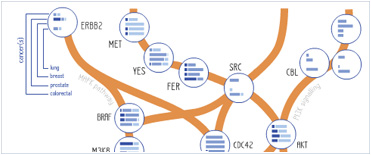








 Foundational characteristics of cancer include proliferation, angiogenesis, migration, evasion of apoptosis, and cellular immortality. Find key markers for these cellular processes and antibodies to detect them.
 The SUMOplot™ Analysis Program predicts and scores sumoylation sites in your protein. SUMOylation is a post-translational modification involved in various cellular processes, such as nuclear-cytosolic transport, transcriptional regulation, apoptosis, protein stability, response to stress, and progression through the cell cycle.
 The Autophagy Receptor Motif Plotter predicts and scores autophagy receptor binding sites in your protein. Identifying proteins connected to this pathway is critical to understanding the role of autophagy in physiological as well as pathological processes such as development, differentiation, neurodegenerative diseases, stress, infection, and cancer.
Anti-GPR73a Antibody
Rabbit polyclonal antibody to GPR73a
- SPECIFICATION
- CITATIONS
- PROTOCOLS
- BACKGROUND

Application 
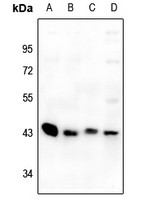
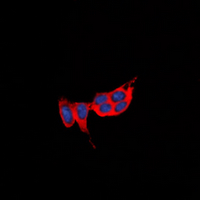
| WB, IF/IC |
|---|---|
| Primary Accession | Q8TCW9 |
| Other Accession | Q9JKL1 |
| Reactivity | Human, Mouse, Rat, Bovine |
| Host | Rabbit |
| Clonality | Polyclonal |
| Calculated MW | 44770 Da |
| Gene ID | 10887 |
|---|---|
| Other Names | GPR73; PKR1; Prokineticin receptor 1; PK-R1; G-protein coupled receptor 73; G-protein coupled receptor ZAQ; GPR73a |
| Target/Specificity | KLH-conjugated synthetic peptide encompassing a sequence within the N-term region of human GPR73a. The exact sequence is proprietary. |
| Dilution | WB~~WB (1/500 - 1/1000), IF/IC (1/100 - 1/500) IF/IC~~N/A |
| Format | Liquid in 0.42% Potassium phosphate, 0.87% Sodium chloride, pH 7.3, 30% glycerol, and 0.09% (W/V) sodium azide. |
| Storage | Store at -20 °C.Stable for 12 months from date of receipt |
| Name | PROKR1 |
|---|---|
| Synonyms | GPR73, PKR1 |
| Function | Receptor for prokineticin 1. Exclusively coupled to the G(q) subclass of heteromeric G proteins. Activation leads to mobilization of calcium, stimulation of phosphoinositide turnover and activation of p44/p42 mitogen-activated protein kinase. May play a role during early pregnancy. |
| Cellular Location | Cell membrane; Multi-pass membrane protein. |
| Tissue Location | Localizes to glandular epithelium, stroma and vascular endothelial cells of first trimester decidua (at protein level). Up-regulated in first trimester decidua when compared with non- pregnant endometrium. Expressed in the stomach, throughout the small intestine, colon, rectum, thyroid gland, pituitary gland, salivary gland, adrenal gland, testis, ovary, brain, spleen, prostate and pancreas. |

Thousands of laboratories across the world have published research that depended on the performance of antibodies from Abcepta to advance their research. Check out links to articles that cite our products in major peer-reviewed journals, organized by research category.
info@abcepta.com, and receive a free "I Love Antibodies" mug.

Provided below are standard protocols that you may find useful for product applications.
Background
KLH-conjugated synthetic peptide encompassing a sequence within the N-term region of human GPR73a. The exact sequence is proprietary.

If you have used an Abcepta product and would like to share how it has performed, please click on the "Submit Review" button and provide the requested information. Our staff will examine and post your review and contact you if needed.
If you have any additional inquiries please email technical services at tech@abcepta.com.

Ordering Information
Other Products
Shipping Information