







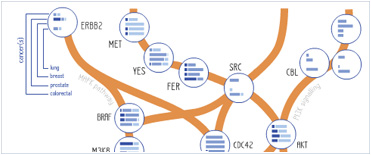








 Foundational characteristics of cancer include proliferation, angiogenesis, migration, evasion of apoptosis, and cellular immortality. Find key markers for these cellular processes and antibodies to detect them.
 The SUMOplot™ Analysis Program predicts and scores sumoylation sites in your protein. SUMOylation is a post-translational modification involved in various cellular processes, such as nuclear-cytosolic transport, transcriptional regulation, apoptosis, protein stability, response to stress, and progression through the cell cycle.
 The Autophagy Receptor Motif Plotter predicts and scores autophagy receptor binding sites in your protein. Identifying proteins connected to this pathway is critical to understanding the role of autophagy in physiological as well as pathological processes such as development, differentiation, neurodegenerative diseases, stress, infection, and cancer.
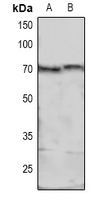
Anti-MARCKS (pS158) Antibody
Rabbit polyclonal antibody to MARCKS (pS158)
- SPECIFICATION
- CITATIONS: 1
- PROTOCOLS
- BACKGROUND

Application 
| WB |
|---|---|
| Primary Accession | P29966 |
| Other Accession | P26645 |
| Reactivity | Human, Mouse, Rat, Zebrafish, Chicken, Bovine |
| Host | Rabbit |
| Clonality | Polyclonal |
| Calculated MW | 31555 Da |
| Gene ID | 4082 |
|---|---|
| Other Names | MACS; PRKCSL; Myristoylated alanine-rich C-kinase substrate; MARCKS; Protein kinase C substrate 80 kDa protein light chain; 80K-L protein; PKCSL |
| Target/Specificity | KLH-conjugated synthetic peptide encompassing a sequence within the center region of human MARCKS. The exact sequence is proprietary. |
| Dilution | WB~~WB (1/500 - 1/1000) |
| Format | Liquid in 0.42% Potassium phosphate, 0.87% Sodium chloride, pH 7.3, 30% glycerol, and 0.09% (W/V) sodium azide. |
| Storage | Store at -20 °C.Stable for 12 months from date of receipt |
| Name | MARCKS |
|---|---|
| Synonyms | MACS, PRKCSL |
| Function | Membrane-associated protein that plays a role in the structural modulation of the actin cytoskeleton, chemotaxis, motility, cell adhesion, phagocytosis, and exocytosis through lipid sequestering and/or protein docking to membranes (PubMed:23704996, PubMed:36009319). Thus, exerts an influence on a plethora of physiological processes, such as embryonic development, tissue regeneration, neuronal plasticity, and inflammation. Sequesters phosphatidylinositol 4,5- bisphosphate (PIP2) at lipid rafts in the plasma membrane of quiescent cells, an action reversed by protein kinase C, ultimately inhibiting exocytosis (PubMed:23704996). During inflammation, promotes the migration and adhesion of inflammatory cells and the secretion of cytokines such as tumor necrosis factor (TNF), particularly in macrophages (PubMed:37949888). Plays an essential role in bacteria- induced intracellular reactive oxygen species (ROS) formation in the monocytic cell type. Participates in the regulation of neurite initiation and outgrowth by interacting with components of cellular machinery including CDC42 that regulates cell shape and process extension through modulation of the cytoskeleton (By similarity). Plays also a role in axon development by mediating docking and fusion of RAB10-positive vesicles with the plasma membrane (By similarity). |
| Cellular Location | Cell membrane; Lipid-anchor. Cytoplasm, cytoskeleton Cytoplasm. Note=PKC-dependent phosphorylation displaces MARCKS from the cell membrane and subsequent dephosphorylation is accompanied by its reassociation with the membrane. |
| Tissue Location | Detected in spermatozoa. |
Research Areas
Citations ( 0 )

Application Protocols
Provided below are standard protocols that you may find useful for product applications.
Background
KLH-conjugated synthetic peptide encompassing a sequence within the center region of human MARCKS. The exact sequence is proprietary.

Abcepta welcomes feedback from its customers.
If you have used an Abcepta product and would like to share how it has performed, please click on the "Submit Review" button and provide the requested information. Our staff will examine and post your review and contact you if needed.
If you have any additional inquiries please email technical services at tech@abcepta.com.

$ 195.00
$ 385.00
Cat# AP61089
Ordering Information
United States
AlbaniaAustraliaAustriaBelgiumBosnia & HerzegovinaBrazilBulgariaCanadaCentral AmericaChinaCroatiaCyprusCzech RepublicDenmarkEstoniaFinlandFranceGermanyGreeceHong KongHungaryIcelandIndiaIndonesiaIrelandIsraelItalyJapanLatviaLithuaniaLuxembourgMacedoniaMalaysiaMaltaMexicoNetherlandsNew ZealandNorwayPakistanPolandPortugalRomaniaSerbiaSingaporeSlovakiaSloveniaSouth AfricaSouth KoreaSpainSwedenSwitzerlandTaiwanTurkeyUnited KingdomUnited StatesVietnamWorldwideOthers
USA Headquarters
(888) 735-7227 / (858) 622-0099 or (858) 875-1900
Other Products
Shipping Information
Domestic orders (in stock items)
Shipped out the same day. Orders placed after 1 PM (PST) will ship out the next business day.
International orders
Contact your local distributors