






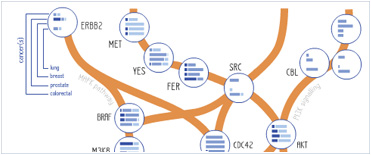








 Foundational characteristics of cancer include proliferation, angiogenesis, migration, evasion of apoptosis, and cellular immortality. Find key markers for these cellular processes and antibodies to detect them.
 The SUMOplot™ Analysis Program predicts and scores sumoylation sites in your protein. SUMOylation is a post-translational modification involved in various cellular processes, such as nuclear-cytosolic transport, transcriptional regulation, apoptosis, protein stability, response to stress, and progression through the cell cycle.
 The Autophagy Receptor Motif Plotter predicts and scores autophagy receptor binding sites in your protein. Identifying proteins connected to this pathway is critical to understanding the role of autophagy in physiological as well as pathological processes such as development, differentiation, neurodegenerative diseases, stress, infection, and cancer.
AMT Antibody (N-term)
Purified Rabbit Polyclonal Antibody (Pab)
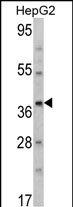
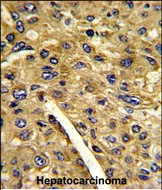
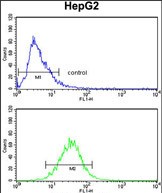
- SPECIFICATION
- CITATIONS
- PROTOCOLS
- BACKGROUND

Application 
| FC, IHC-P, WB, E |
|---|---|
| Primary Accession | P48728 |
| Other Accession | Q8CFA2 |
| Reactivity | Human |
| Predicted | Mouse |
| Host | Rabbit |
| Clonality | Polyclonal |
| Isotype | Rabbit IgG |
| Calculated MW | 43946 Da |
| Antigen Region | 19-45 aa |
| Gene ID | 275 |
|---|---|
| Other Names | Aminomethyltransferase, mitochondrial, Glycine cleavage system T protein, GCVT, AMT, GCST |
| Target/Specificity | This AMT antibody is generated from rabbits immunized with a KLH conjugated synthetic peptide between 19-45 amino acids from the N-terminal region of human AMT. |
| Dilution | FC~~1:10~50 IHC-P~~1:50~100 WB~~1:1000 E~~Use at an assay dependent concentration. |
| Format | Purified polyclonal antibody supplied in PBS with 0.09% (W/V) sodium azide. This antibody is prepared by Saturated Ammonium Sulfate (SAS) precipitation followed by dialysis against PBS. |
| Storage | Maintain refrigerated at 2-8°C for up to 2 weeks. For long term storage store at -20°C in small aliquots to prevent freeze-thaw cycles. |
| Precautions | AMT Antibody (N-term) is for research use only and not for use in diagnostic or therapeutic procedures. |
| Name | AMT (HGNC:473) |
|---|---|
| Function | The glycine cleavage system catalyzes the degradation of glycine. |
| Cellular Location | Mitochondrion. |

Thousands of laboratories across the world have published research that depended on the performance of antibodies from Abcepta to advance their research. Check out links to articles that cite our products in major peer-reviewed journals, organized by research category.
info@abcepta.com, and receive a free "I Love Antibodies" mug.

Provided below are standard protocols that you may find useful for product applications.
Background
The enzyme system for cleavage of glycine (glycine cleavage system; EC 2.1.2.10), which is confined to the mitochondria, is composed of 4 protein components: P protein (a pyridoxal phosphate-dependent glycine decarboxylase; MIM 238300), H protein (a lipoic acid-containing protein; MIM 238330), T protein (a tetrahydrofolate-requiring enzyme), and L protein (a lipoamide dehydrogenase; MIM 238331). Glycine encephalopathy (GCE; MIM 605899) may be due to a defect in any one of these enzymes.
References
Nanao,K., Genomics 19 (1), 27-30 (1994)

If you have used an Abcepta product and would like to share how it has performed, please click on the "Submit Review" button and provide the requested information. Our staff will examine and post your review and contact you if needed.
If you have any additional inquiries please email technical services at tech@abcepta.com.

Ordering Information
Other Products
Shipping Information