






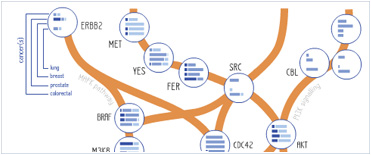








 Foundational characteristics of cancer include proliferation, angiogenesis, migration, evasion of apoptosis, and cellular immortality. Find key markers for these cellular processes and antibodies to detect them.
 The SUMOplot™ Analysis Program predicts and scores sumoylation sites in your protein. SUMOylation is a post-translational modification involved in various cellular processes, such as nuclear-cytosolic transport, transcriptional regulation, apoptosis, protein stability, response to stress, and progression through the cell cycle.
 The Autophagy Receptor Motif Plotter predicts and scores autophagy receptor binding sites in your protein. Identifying proteins connected to this pathway is critical to understanding the role of autophagy in physiological as well as pathological processes such as development, differentiation, neurodegenerative diseases, stress, infection, and cancer.
AXIN2 Antibody
- SPECIFICATION
- CITATIONS
- PROTOCOLS
- BACKGROUND

Application 
| WB, IHC-P, IF, E |
|---|---|
| Primary Accession | Q9Y2T1 |
| Other Accession | AAF22799, 8313 |
| Reactivity | Human, Mouse, Rat |
| Host | Rabbit |
| Clonality | Polyclonal |
| Isotype | IgG |
| Calculated MW | 85, 93 kDa |
| Application Notes | AXIN2 antibody can be used for detection of AXIN2 by Western blot at 1 μg/mL. Antibody can also be used for immunohistochemistry starting at 5 μg/mL. For immunofluorescence start at 20 μg/mL. |
| Gene ID | 8313 |
|---|---|
| Target/Specificity | AXIN2 antibody was raised against a 20 amino acid synthetic peptide near the carboxy terminus of human AXIN2. The immunogen is located within amino acids 780 - 830 of AXIN2. |
| Reconstitution & Storage | AXIN2 antibody can be stored at 4℃ for three months and -20℃, stable for up to one year. As with all antibodies care should be taken to avoid repeated freeze thaw cycles. Antibodies should not be exposed to prolonged high temperatures. |
| Precautions | AXIN2 Antibody is for research use only and not for use in diagnostic or therapeutic procedures. |
| Name | AXIN2 |
|---|---|
| Function | Inhibitor of the Wnt signaling pathway. Down-regulates beta- catenin. Probably facilitate the phosphorylation of beta-catenin and APC by GSK3B. |
| Cellular Location | Cytoplasm. |
| Tissue Location | Expressed in brain and lymphoblast. |

Thousands of laboratories across the world have published research that depended on the performance of antibodies from Abcepta to advance their research. Check out links to articles that cite our products in major peer-reviewed journals, organized by research category.
info@abcepta.com, and receive a free "I Love Antibodies" mug.

Provided below are standard protocols that you may find useful for product applications.
Background
AXIN2 Antibody: Like the related protein AXIN1, AXIN2 is thought to play an important role in the regulation of the stability of beta-catenin in the Wnt signaling pathway. In mouse, AXIN2 organizes a multiprotein complex of APC (adenomatous polyposis of the colon), beta-catenin, glycogen synthase kinase 3-beta, and AXIN2, which leads to the degradation of beta-catenin, which is thought to be an important event in the genesis of a number of malignancies. The AXIN2 gene has been mapped to 17q23-q24, a region that shows frequent loss of heterozygosity in breast cancer, neuroblastoma, and other tumors. Mutations in this gene have been associated with colorectal cancer with defective mismatch repair.
References
Katoh M and Katoh M. WNT signaling pathway and stem cell signaling network. Clin. Cancer Res.2007; 13:4042-5.
Behrens J, Jerchow BA, Wurtele M, et al. Functional interaction of an axin homolog, conductin, with beta-catenin, APC, and GSK3beta. Science1998; 280:596-9.
Hadjihannas MV and Behrens J. CIN by WNT: growth pathways, mitotic control and chromosome instability in cancer. Cell Cycle2006; 5:2077-81.
Mai M, Qian C, Yokomizo A, et al. Cloning of the human homolog of conductin (AXIN2), a gene mapping to chromosome 17q23-q24. Genomics1999; 55:341-4.

If you have used an Abcepta product and would like to share how it has performed, please click on the "Submit Review" button and provide the requested information. Our staff will examine and post your review and contact you if needed.
If you have any additional inquiries please email technical services at tech@abcepta.com.

Ordering Information
Other Products
Shipping Information