






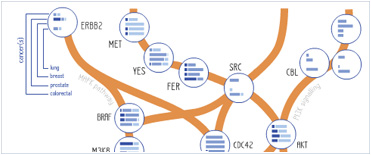








 Foundational characteristics of cancer include proliferation, angiogenesis, migration, evasion of apoptosis, and cellular immortality. Find key markers for these cellular processes and antibodies to detect them.
 The SUMOplot™ Analysis Program predicts and scores sumoylation sites in your protein. SUMOylation is a post-translational modification involved in various cellular processes, such as nuclear-cytosolic transport, transcriptional regulation, apoptosis, protein stability, response to stress, and progression through the cell cycle.
 The Autophagy Receptor Motif Plotter predicts and scores autophagy receptor binding sites in your protein. Identifying proteins connected to this pathway is critical to understanding the role of autophagy in physiological as well as pathological processes such as development, differentiation, neurodegenerative diseases, stress, infection, and cancer.
Anti-Keratin (MOUSE) Monoclonal Antibody
Keratin Antibody

- SPECIFICATION
- CITATIONS
- PROTOCOLS
- BACKGROUND

| Host | Mouse |
|---|---|
| Conjugate | Unconjugated |
| Target Species | Human |
| Reactivity | Human |
| Clonality | Monoclonal |
Application 
| WB, IHC, E, IP, I, LCI |
| Application Note | Anti-Keratin Antibody has been tested in ELISA, immunohistochemistry, immunofluorescence, immunoblotting and immunoprecipitation. For a positive control use skin, colon carcinoma and squamous granulocyte carcinoma cells. |
| Physical State | Liquid (sterile filtered) |
| Buffer | 0.02 M Potassium Phosphate, 0.15 M Sodium Chloride, pH 7.2 |
| Immunogen | This protein A purified monoclonal antibody was produced by repeated immunizations with purified human cytoskeletal preparations from A431 cells. |
| Preservative | 0.01% (w/v) Sodium Azide |
| Gene ID | 286887 |
|---|---|
| Other Names | 286887 |
| Purity | This protein A purified mouse monoclonal antibody reacts specifically with keratins from human tissues and derived cell lines. This antibody reacts with keratin (56 kDa), keratin 17 (46 kDa), keratin 18 (45 kDa) and keratin 19 (40 kDa) derived from humans. Cross reactivity with keratins from other sources has not been determined. No reaction is expected against other filament proteins including vimentin, desmin and neurofilament protein. |
| Storage Condition | Store vial at -20° C prior to opening. Aliquot contents and freeze at -20° C or below for extended storage. Avoid cycles of freezing and thawing. Centrifuge product if not completely clear after standing at room temperature. This product is stable for several weeks at 4° C as an undiluted liquid. Dilute only prior to immediate use. |
| Precautions Note | This product is for research use only and is not intended for therapeutic or diagnostic applications. |
| Name | KRT6C |
|---|---|
| Synonyms | KRT6E |
| Tissue Location | Constitutively expressed in distinct types of epithelia such as those in oral mucosa, esophagus, papillae of tongue and hair follicle outer root sheath |

Thousands of laboratories across the world have published research that depended on the performance of antibodies from Abcepta to advance their research. Check out links to articles that cite our products in major peer-reviewed journals, organized by research category.
info@abcepta.com, and receive a free "I Love Antibodies" mug.

Provided below are standard protocols that you may find useful for product applications.
Background
Keratins are intermediate filament proteins responsible for the structural integrity of epithelial cells and are subdivided into epithelial keratins and hair keratins. There are two types of keratins (cytoskeletal and microfibrillar) and are clustered in a region of chromosome. Cytokeratins (CK) are intermediate filaments of epithelial cells, both in keratinizing tissue (i.e. skin) and non-keratinizing cells (i.e. mesothelial). Anti-Keratin Antibody is useful for researchers interested in cytoskeletal signaling and developmental biology research.

If you have used an Abcepta product and would like to share how it has performed, please click on the "Submit Review" button and provide the requested information. Our staff will examine and post your review and contact you if needed.
If you have any additional inquiries please email technical services at tech@abcepta.com.

Ordering Information
Other Products
Shipping Information