






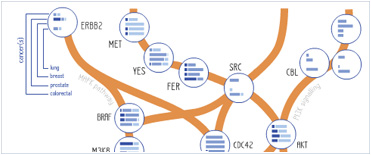








 Foundational characteristics of cancer include proliferation, angiogenesis, migration, evasion of apoptosis, and cellular immortality. Find key markers for these cellular processes and antibodies to detect them.
 The SUMOplot™ Analysis Program predicts and scores sumoylation sites in your protein. SUMOylation is a post-translational modification involved in various cellular processes, such as nuclear-cytosolic transport, transcriptional regulation, apoptosis, protein stability, response to stress, and progression through the cell cycle.
 The Autophagy Receptor Motif Plotter predicts and scores autophagy receptor binding sites in your protein. Identifying proteins connected to this pathway is critical to understanding the role of autophagy in physiological as well as pathological processes such as development, differentiation, neurodegenerative diseases, stress, infection, and cancer.
Anti-HMGN pS20/pS24 (RABBIT) Antibody
HMGN phospho S20/S24 Antibody
- SPECIFICATION
- CITATIONS
- PROTOCOLS
- BACKGROUND

| Host | Rabbit |
|---|---|
| Conjugate | Unconjugated |
| Target Species | Human |
| Reactivity | Human |
| Clonality | Polyclonal |
Application 
| WB, IHC, E, I, LCI |
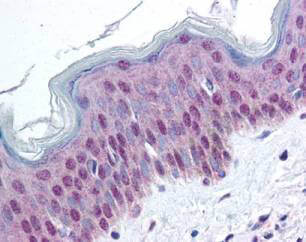
| Application Note | Anti-HMGN pS20-pS24 affinity purified antibody has been tested for use in ELISA, immunohistochemistry, and western blot. Specific conditions for reactivity should be optimized by the end user. Expect a band approximately 17 kDa in size corresponding to phosphorylated HMGN proteins by western blotting in the appropriate cell lysate or extract. Less than 0.5% reactivity is observed against the non-phosphorylated form of the immunizing peptide. This antibody is phospho specific for pS20 and pS24 of HMGN proteins. The antibody was tested against HMGN1 by performing a standard phosphorylation in vitro assay using HMGN1 as a substrate and Msk1 as a kinase (known as a main effector kinase of MAPK signaling pathway and in vivo kinase for HMGN1). This kinase specifically phosphorylates S20 and S24 of HMGN1 (S24 and S28 of HMGN2). The reaction was resolved on SDS PAGE and immunoblot, using antibody diluted at 1:1,000 and 1:5,000. The antibody shows strong positive signal for Msk-phosphorylated HMGN1 and no cross-reaction for non-treated HMGN1. |
| Physical State | Liquid (sterile filtered) |
| Buffer | 0.02 M Potassium Phosphate, 0.15 M Sodium Chloride, pH 7.2 |
| Immunogen | This affinity purified antibody was prepared from whole rabbit serum produced by repeated immunizations with a synthetic peptide corresponding to amino acids 19-28 of human HMGN protein (see below). |
| Preservative | 0.01% (w/v) Sodium Azide |
| Gene ID | 3150 |
|---|---|
| Other Names | 3091 |
| Purity | This affinity-purified antibody is directed against phosphorylated human HMGN protein at pS20 and pS24 residues (other HMGN proteins have this conserved sequence but at other residue positions). The product was affinity purified from monospecific antiserum by immunoaffinity purification. Antiserum was first purified against the phosphorylated form of the immunizing peptide. The resultant affinity purified antibody was then cross-adsorbed against the non-phosphorylated form of the immunizing peptide. Reactivity occurs against human HMGN pS20/pS24 proteins and the antibody is specific for the phosphorylated form of the proteins. Reactivity is seen against HMGN1 and HMGN2. HMGN3 is also likely reactive although not tested. Reactivity with non-phosphorylated human HMGNs is minimal by ELISA. A BLAST analysis was used to suggest cross reactivity with HMGN proteins from Xenopus, chicken, mouse, bovine, dog, orangutan, rat and swine based on 100% homology with the immunizing sequence. Reactivity against homologues from other sources is not known. |
| Storage Condition | Store vial at -20° C prior to opening. Aliquot contents and freeze at -20° C or below for extended storage. Avoid cycles of freezing and thawing. Centrifuge product if not completely clear after standing at room temperature. This product is stable for several weeks at 4° C as an undiluted liquid. Dilute only prior to immediate use. |
| Precautions Note | This product is for research use only and is not intended for therapeutic or diagnostic applications. |
| Name | HMGN1 |
|---|---|
| Synonyms | HMG14 |
| Function | Binds to the inner side of the nucleosomal DNA thus altering the interaction between the DNA and the histone octamer. May be involved in the process which maintains transcribable genes in a unique chromatin conformation. Inhibits the phosphorylation of nucleosomal histones H3 and H2A by RPS6KA5/MSK1 and RPS6KA3/RSK2 (By similarity). |
| Cellular Location | Nucleus. Cytoplasm. Note=Cytoplasmic enrichment upon phosphorylation. The RNA edited version localizes to the nucleus |

Thousands of laboratories across the world have published research that depended on the performance of antibodies from Abcepta to advance their research. Check out links to articles that cite our products in major peer-reviewed journals, organized by research category.
info@abcepta.com, and receive a free "I Love Antibodies" mug.

Provided below are standard protocols that you may find useful for product applications.
Background
This antibody is designed, produced, and validated as part of a collaboration between Rockland and the National Cancer Institute (NCI). HMGNs are proteins that bind chromatin effectively reducing the compaction of the chromatin fiber and enhancing access to DNA regulatory sequences. Members of this family have a conserved chromatin binding domain which is phosphorylated during mitosis. The sequence immunized is conserved in several species. As such, this reagent is designed as a ''universal'' reagent for the detection of all phosphorylated HMGN proteins. The High Mobility Group (HMG) proteins were originally isolated from mammalian cells and were named according to their electrophoretic mobility in polyacrylamide gels. HMGs were arbitrarily classed as a specific type of non-histone proteins based on the observation that they are ubiquitous to mammalian cells, that they share certain physical properties, and that they are associated with isolated chromatin. HMG proteins and are now subdivided into 3 families: the HMGB (formerly HMG-1/-2) family, the HMGN (formerly HMG-14/-17) family, and the HMGA (formerly HMG-I/Y/C) family. Each HMG family has a characteristic functional sequence motif. The functional motif of the HMGB family is called the ''HMG-box;'' that of the HMGN family, the ''nucleosomal binding domain;'' and that of the HMGA family, the ''AT-hook.'' The functional motifs characteristic of these canonical HMGs are widespread among nuclear proteins in a variety of organisms. Proteins containing any of these functional motifs embedded in their sequence are known as ''HMG motif proteins.'' Anti-HMGN pS20-pS24 Antibody is ideal for researchers interested in chromatin binding and Nuclear Signaling research.

If you have used an Abcepta product and would like to share how it has performed, please click on the "Submit Review" button and provide the requested information. Our staff will examine and post your review and contact you if needed.
If you have any additional inquiries please email technical services at tech@abcepta.com.

Ordering Information
Other Products
Shipping Information