







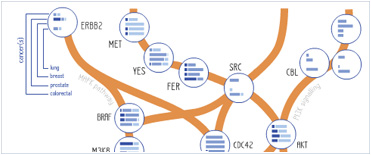








 Foundational characteristics of cancer include proliferation, angiogenesis, migration, evasion of apoptosis, and cellular immortality. Find key markers for these cellular processes and antibodies to detect them.
 The SUMOplot™ Analysis Program predicts and scores sumoylation sites in your protein. SUMOylation is a post-translational modification involved in various cellular processes, such as nuclear-cytosolic transport, transcriptional regulation, apoptosis, protein stability, response to stress, and progression through the cell cycle.
 The Autophagy Receptor Motif Plotter predicts and scores autophagy receptor binding sites in your protein. Identifying proteins connected to this pathway is critical to understanding the role of autophagy in physiological as well as pathological processes such as development, differentiation, neurodegenerative diseases, stress, infection, and cancer.
In Vivo Ready™ Anti-Mouse IL-10 (JES5-2A5) Antibody
- SPECIFICATION
- CITATIONS
- PROTOCOLS
- BACKGROUND

Application 
| FA |
|---|---|
| Isotype | Rat IgG1, kappa |
| Concentration | 2.0 mg/mL |
| Reactivity | Mouse |
| Formulation | 10 mM NaH2PO4, 150 mM NaCl, pH7.2 |
| Host | Rat |
| Alternative Name(s) | Interleukin-10, IL10 |
|---|---|
| Format | In Vivo Ready™ |
| Storage Conditions | 2-8°C |
Provided below are standard protocols that you may find useful for product applications.
Background
The JES5-2A5 antibody is specific for mouse IL-10. IL-10 has numerous biological activities including the ability to inhibit both the synthesis of Th1 cytokines and proliferation of T cells. In the mouse, IL-10 is produced by phagocytic cells, conventional dendritic, cells, T cells, B cells, and NK cells. The JES5-2A5 antibody is a neutralizing antibody.
References
Abrams JS, Roncarolo MG, Yssel H, Andersson U, Gleich GJ, Silver, JE. 1992. Immunol Rev. 127:5-24.
Sander B, Hoiden I, Andersson U, Moller E, Abrams JS. 1993. J Immunol Methods. 166(2):201-214.
Marchant A, Bruyns C, Vandenabeele P, Ducarme M, Gérard C, Delvaux A, De Groote D, Abramowicz D, Velu T, Goldman M. 1994. Eur J Immunol. 24(5):1167-1171.
Asseman C, Mauze S, Leach MW, Coffman RL, Powrie F. 1999. J Exp Med. 190:995-1004.


If you have used an Abcepta product and would like to share how it has performed, please click on the "Submit Review" button and provide the requested information. Our staff will examine and post your review and contact you if needed.
If you have any additional inquiries please email technical services at tech@abcepta.com.

Ordering Information
Shipping Information