






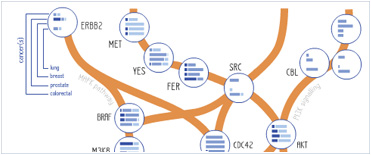








 Foundational characteristics of cancer include proliferation, angiogenesis, migration, evasion of apoptosis, and cellular immortality. Find key markers for these cellular processes and antibodies to detect them.
 The SUMOplot™ Analysis Program predicts and scores sumoylation sites in your protein. SUMOylation is a post-translational modification involved in various cellular processes, such as nuclear-cytosolic transport, transcriptional regulation, apoptosis, protein stability, response to stress, and progression through the cell cycle.
 The Autophagy Receptor Motif Plotter predicts and scores autophagy receptor binding sites in your protein. Identifying proteins connected to this pathway is critical to understanding the role of autophagy in physiological as well as pathological processes such as development, differentiation, neurodegenerative diseases, stress, infection, and cancer.
Dipeptidylpeptidase IV, human recombinant protein
CD26, ADABP, ADCP2, DPPIV, TP103, DPP4, Dipeptidyl peptidase 4, Dipeptidyl peptidase IV, DPP IV, T-c
- SPECIFICATION
- CITATIONS
- PROTOCOLS
- BACKGROUND
| Primary Accession | P27487 |
|---|---|
| Calculated MW | 86.4 kDa |
| Gene ID | 1803 |
|---|---|
| Gene Symbol | DPP4 |
| Other Names | CD26, ADABP, ADCP2, DPPIV, TP103, DPP4, Dipeptidyl peptidase 4, Dipeptidyl peptidase IV, DPP IV, T-cell activation antigen CD26, Adenosine deaminase complexing protein 2, CD26 antigen. |
| Gene Source | Human |
| Source | High-5 cells |
| Assay&Purity | SDS-PAGE; ≥95% |
| Assay2&Purity2 | HPLC; |
| Recombinant | Yes |
| Sequence | ADP-SRKTYTLTDYLKNTYRLKLYSLRWISDHEYLYKQENNILVFNAEYGNSSVFLENSTFDEFGHSINDYSISPDGQFILLEYNYVKQWRHSYTASYDIYDLNKRQLITEERIPNNTQWVTWSPVGHKLAYVWNNDIYVKIEPNLPSYRITWTGKEDIIYNGITDWVYEEEVFSAYSALWWSPNGTFLAYAQFNDTEVPLIEYSFYSDESLQYPKTVRVPYPKAGAVNPTVKFFVVNTDSLSSVTNATSIQITAPASMLIGDHYLCDVTWATQERISLQWLRRIQNYSVMDICDYDESSGRWNCLVARQHIEMSTTGWVGRFRPSEPHFTLDGNSFYKIISNEEGYRHICYFQIDKKDCTFITKGTWEVIGIEALTSDYLYYISNEYKGMPGGRNLYKIQLSDYTKVTCLSCELNPERCQYYSVSFSKEAKYYQLRCSGPGLPLYTLHSSVNDKGLRVLEDNSALDKMLQNVQMPSKKLDFIILNETKFWYQMILPPHFDKSKKYPLLLDVYAGPCSQKADTVFRLNWATYLASTENIIVASFDGRGSGYQGDKIMHAINRRLGTFEVEDQIEAARQFSKMGFVDNKRIAIWGWSYGGYVTSMVLGSGSGVFKCGIAVAPVSRWEYYDSVYTERYMGLPTPEDNLDHYRNSTVMSRAENFKQVEYLLIHGTADDNVHFQQSAQISKALVDVGVDFQAMWYTDEDHGIASSTAHQHIYTHMSHFIKQCFSLP-SGRLVPRGSHHHHHH |
| Format | Liquid |
| Storage | -20°C; 0.5 mg/ml; Sterile filtered solution containing 20 mM Tris-HCl buffer pH 8.0,100 mM NaCl, 1 mM EDTA and 10 % glycerol. |

Thousands of laboratories across the world have published research that depended on the performance of antibodies from Abcepta to advance their research. Check out links to articles that cite our products in major peer-reviewed journals, organized by research category.
info@abcepta.com, and receive a free "I Love Antibodies" mug.

Provided below are standard protocols that you may find useful for product applications.
Background
DPP4 is a serine exopeptidase and complex enzyme that is expressed on the surface of most cell types as an intrinsic membrane glycoprotein that cleaves X-proline dipeptides from the N-terminus of polypeptides and plays a role in t-cell activation. DPP4 is associated with intracellular signal transduction, apoptosis and involved in tumor biology. There are at least 63 substrates which can bind specifically to DPP4 enzyme including growth factors, chemokines, neuro peptides. Furthermore, DPP4 plays a major role in glucose metabolism by cleaving incretins such as glucose-dependent insulinotropic polypeptide (GIP) and glucagon-like peptide-1 (GLP-1). DPP4 Human Recombinant is a single, glycosylated polypeptide chain containing 746 amino acids (aa 39-766) with a C-terminal His-tag and is purified using conventional chromatography techniques.
References
Misumi Y.,et al.Biochim. Biophys. Acta 1131:333-336(1992).
Darmoul D.,et al.J. Biol. Chem. 267:4824-4833(1992).
Tanaka T.,et al.J. Immunol. 149:481-486(1992).
Tanaka T.,et al.J. Immunol. 150:2090-2090(1993).
Abbott C.A.,et al.Immunogenetics 40:331-338(1994).

If you have used an Abcepta product and would like to share how it has performed, please click on the "Submit Review" button and provide the requested information. Our staff will examine and post your review and contact you if needed.
If you have any additional inquiries please email technical services at tech@abcepta.com.

Ordering Information
Other Products
Shipping Information