






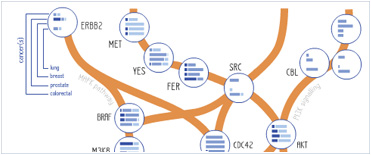








 Foundational characteristics of cancer include proliferation, angiogenesis, migration, evasion of apoptosis, and cellular immortality. Find key markers for these cellular processes and antibodies to detect them.
 The SUMOplot™ Analysis Program predicts and scores sumoylation sites in your protein. SUMOylation is a post-translational modification involved in various cellular processes, such as nuclear-cytosolic transport, transcriptional regulation, apoptosis, protein stability, response to stress, and progression through the cell cycle.
 The Autophagy Receptor Motif Plotter predicts and scores autophagy receptor binding sites in your protein. Identifying proteins connected to this pathway is critical to understanding the role of autophagy in physiological as well as pathological processes such as development, differentiation, neurodegenerative diseases, stress, infection, and cancer.
Human recombinant protein TXNRD1
Human Recombinant TXNRD1
- SPECIFICATION
- CITATIONS
- PROTOCOLS
- BACKGROUND
| Primary Accession | Q16881 |
|---|---|
| Concentration | 0.5 |
| Calculated MW | 55.7 kDa |
| Gene ID | 7296 |
|---|---|
| Gene Symbol | TXNRD1 |
| Other Names | Thioredoxin Reductase, GRIM-12, MGC9145, TR, TR1, TRXR1, TXNR. |
| Gene Source | Human |
| Source | E. Coli |
| Assay&Purity | SDS-PAGE; ≥95% |
| Assay2&Purity2 | N/A; |
| Recombinant | Yes |
| Sequence | MGSSHHHHHH SSGLVPRGSH MYDYDLIIIG GGSGGLAAAK EAAQYGKKVM VLDFVTPTPL GTRWGLGGTC VNVGCIPKKL MHQAALLGQA LQDSRNYGWK VEETVKHDWD RMIEAVQNHI GSLNWGYRVA LREKKVVYEN AYGQFIGPHR IKATNNKGKE KIYSAERFLI ATGERPRYLG IPGDKEYCIS SDDLFSLPYC PGKTLVVGAS YVALECAGFL AGIGLDVTVM VRSILLRGFD QDMANKIGEH MEEHGIKFIR QFVPIKVEQI EAGTPGRLRV VAQSTNSEEI IEGEYNTVML AIGRDACTRK IGLETVGVKI NEKTGKIPVT DEEQTNVPYI YAIGDILEDK VELTPVAIQA GRLLAQRLYA GSTVKCDYEN VPTTVFTPLE YGACGLSEEK AVEKFGEENI EVYHSYFWPL EWTIPSRDNN KCYAKIICNT KDNERVVGFH VLGPNAGEVT QGFAAALKCG LTKKQLDSTI GIHPVCAEVF TTLSVTKRSG ASILQAGC |
| Format | Liquid |
| Storage | -80°C; 0.5 mg/ml solution in PBS (pH 7.4) containing 10% glycerol. |

Thousands of laboratories across the world have published research that depended on the performance of antibodies from Abcepta to advance their research. Check out links to articles that cite our products in major peer-reviewed journals, organized by research category.
info@abcepta.com, and receive a free "I Love Antibodies" mug.

Provided below are standard protocols that you may find useful for product applications.
Background
Thioredoxin reductase 1, cytoplasmic is an enzyme that in humans is encoded by the TXNRD1 gene. This gene encodes a member of the family of pyridine nucleotide oxidoreductases. This protein reduces thioredoxins as well as other substrates, and plays a role in selenium metabolism and protection against oxidative stress. The functional enzyme is thought to be a homodimer which uses FAD as a cofactor. Inhibition of TXNRD1 activity may provide for potential treatments of cancer, AIDS and other autoimmune diseases as well as bacterial infections and parasitic diseases
References
Gasdaska P.Y.,et al.FEBS Lett. 373:5-9(1995).
Koishi R.,et al.J. Biol. Chem. 272:2570-2577(1997).
Hofman E.R.,et al.Mol. Cell. Biol. 18:6493-6504(1998).
Rundloef A.-K.,et al.Free Radic. Biol. Med. 36:641-656(2004).
Schuetze N.,et al.Submitted (AUG-1997) to the EMBL/GenBank/DDBJ databases.

If you have used an Abcepta product and would like to share how it has performed, please click on the "Submit Review" button and provide the requested information. Our staff will examine and post your review and contact you if needed.
If you have any additional inquiries please email technical services at tech@abcepta.com.

Ordering Information
Other Products
Shipping Information