






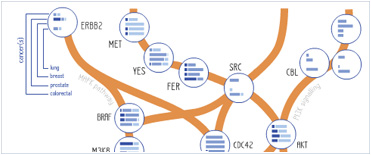








 Foundational characteristics of cancer include proliferation, angiogenesis, migration, evasion of apoptosis, and cellular immortality. Find key markers for these cellular processes and antibodies to detect them.
 The SUMOplot™ Analysis Program predicts and scores sumoylation sites in your protein. SUMOylation is a post-translational modification involved in various cellular processes, such as nuclear-cytosolic transport, transcriptional regulation, apoptosis, protein stability, response to stress, and progression through the cell cycle.
 The Autophagy Receptor Motif Plotter predicts and scores autophagy receptor binding sites in your protein. Identifying proteins connected to this pathway is critical to understanding the role of autophagy in physiological as well as pathological processes such as development, differentiation, neurodegenerative diseases, stress, infection, and cancer.
Human recombinant protein ALDH2
Human Recombinant ALDH2
- SPECIFICATION
- CITATIONS
- PROTOCOLS
- BACKGROUND
| Primary Accession | P05091 |
|---|---|
| Concentration | 1 |
| Calculated MW | 54.5 kDa |
| Gene ID | 217 |
|---|---|
| Gene Symbol | ALDH2 |
| Other Names | Aldehyde dehydrogenase - mitochondrial, ALDH-E2, ALDHI, ALDM. |
| Gene Source | Human |
| Source | E. coli |
| Assay&Purity | SDS-PAGE; ≥90% |
| Assay2&Purity2 | N/A; |
| Recombinant | Yes |
| Sequence | MSAAATQAVP APNQQPEVFC NQIFINNEWH DAVSRKTFPT VNPSTGEVIC QVAEGDKEDV DKAVKAARAA FQLGSPWRRM DASHRGRLLN RLADLIERDR TYLAALETLD NGKPYVISYL VDLDMVLKCL RYYAGWADKY HGKTIPIDGD FFSYTRHEPV GVCGQIIPWN FPLLMQAWKL GPALATGNVV VMKVAEQTPL TALYVANLIK EAGFPPGVVN IVPGFGPTAG AAIASHEDVD KVAFTGSTEI GRVIQVAAGS SNLKRVTLEL GGKSPNIIMS DADMDWAVEQ AHFALFFNQG QCCCAGSRTF VQEDIYDEFV ERSVARAKSR VVGNPFDSKT EQGPQVDETQ FKKILGYINT GKQEGAKLLC GGGIAADRGY FIQPTVFGDV QDGMTIAKEE IFGPVMQILK FKTIEEVVGR ANNSTYGLAA AVFTKDLDKA NYLSQALQAG TVWVNCYDVF GAQSPFGGYK MSGSGRELGE YGLQAYTEVK TVTVKVPQKN S |
| Format | Liquid |
| Storage | -80°C; 1 mg/ml solution in 20 mM Tris-HCl buffer (pH 7.5) containing 1 mM DTT, 1 mM EDTA and 10% glycerol. |

Thousands of laboratories across the world have published research that depended on the performance of antibodies from Abcepta to advance their research. Check out links to articles that cite our products in major peer-reviewed journals, organized by research category.
info@abcepta.com, and receive a free "I Love Antibodies" mug.

Provided below are standard protocols that you may find useful for product applications.
Background
ALDH2 (Aldehyde dehydrogenase 2 family) belongs to the aldehyde dehydrogenase family which catalyze the chemical transformation from acetaldehyde to acetic acid and is the second enzyme of the major oxidative pathway of alcohol metabolism. There are two major liver isoforms of this enzyme, cytosolic and mitochondrial, and they can be also distinguished by their electrophoretic mobilities, kinetic properties, and subcellular localizations. ALDH2 has been shown to interact with GroEL.
References
Braun T.,et al.FEBS Lett. 215:233-236(1987).
Braun T.,et al.FEBS Lett. 233:440-440(1988).
Braun T.,et al.Nucleic Acids Res. 15:3179-3179(1987).
Hsu L.C.,et al.Genomics 2:57-65(1988).
Lassen N.,et al.Submitted (MAY-2004) to the EMBL/GenBank/DDBJ databases.

If you have used an Abcepta product and would like to share how it has performed, please click on the "Submit Review" button and provide the requested information. Our staff will examine and post your review and contact you if needed.
If you have any additional inquiries please email technical services at tech@abcepta.com.

Ordering Information
Other Products
Shipping Information