






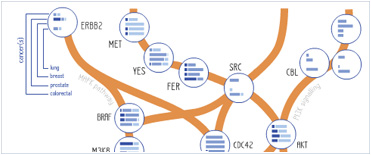








 Foundational characteristics of cancer include proliferation, angiogenesis, migration, evasion of apoptosis, and cellular immortality. Find key markers for these cellular processes and antibodies to detect them.
 The SUMOplot™ Analysis Program predicts and scores sumoylation sites in your protein. SUMOylation is a post-translational modification involved in various cellular processes, such as nuclear-cytosolic transport, transcriptional regulation, apoptosis, protein stability, response to stress, and progression through the cell cycle.
 The Autophagy Receptor Motif Plotter predicts and scores autophagy receptor binding sites in your protein. Identifying proteins connected to this pathway is critical to understanding the role of autophagy in physiological as well as pathological processes such as development, differentiation, neurodegenerative diseases, stress, infection, and cancer.
Eotaxin-2/CCL24
- SPECIFICATION
- CITATIONS
- PROTOCOLS
- BACKGROUND
| Primary Accession | Q5PPP2 |
|---|---|
| Species | Rat |
| Sequence | Pro23-Val119, expressed with an N-terminal Met |
| Purity | > 96% as analyzed by SDS-PAGE > 96% as analyzed by HPLC |
| Endotoxin Level | < 1 EU/ µg of protein by LAL method |
| Biological Activity | Fully biologically active when compared to standard. The biologically active determined by a chemotaxis bioassay using human peripheral blood eosinophils is in a concentration of 50.0-250.0 ng/ml. |
| Expression System | E. coli |
| Theoretical Molecular Weight | 10.5 kDa |
| Formulation | Lyophilized from a 0.2 µm filtered solution in 2 × PBS, pH 7.4. |
| Reconstitution | It is recommended that this vial be briefly centrifuged prior to opening to bring the contents to the bottom. Reconstitute the lyophilized powder in sterile distilled water or aqueous buffer containing 0.1% BSA to a concentration of 0.1-1.0 mg/ml. |
| Storage & Stability | Upon receiving, this product remains stable for up to 6 months at -70°C or -20°C. Upon reconstitution, the product should be stable for up to 1 week at 4°C or up to 3 months at -20°C. Avoid repeated freeze-thaw cycles. |
| Target Background | Eotaxin-2/CCL24, also named MPIF-2 and Ckβ6, is a novel CC chemokine recently identified. It is produced by activated monocytes and T lymphocytes. Eotaxin-2 selectively chemoattracts cells expressing CCR3 including eosinophils, basophils, Th2 T cells, mast cells, and certain subsets of dendritic cells. Additionally, Eotaxin-2 inhibits the proliferation of multipotential hematopoietic progenitor cells. The mature protein, which also includes a C-terminal truncation, contains 78 amino acid residues (92 a.a. residues for the mouse homolog, without C-terminal truncation). |
|---|
Research Areas
Citations (0)

Thousands of laboratories across the world have published research that depended on the performance of antibodies from Abcepta to advance their research. Check out links to articles that cite our products in major peer-reviewed journals, organized by research category.
Submit your citation using an Abcepta antibody to
info@abcepta.com, and receive a free "I Love Antibodies" mug.
info@abcepta.com, and receive a free "I Love Antibodies" mug.

Application Protocols
Provided below are standard protocols that you may find useful for product applications.

Abcepta welcomes feedback from its customers.
If you have used an Abcepta product and would like to share how it has performed, please click on the "Submit Review" button and provide the requested information. Our staff will examine and post your review and contact you if needed.
If you have any additional inquiries please email technical services at tech@abcepta.com.

$ 0.00
$ 0.00
Cat# PVGS1198
Ordering Information
United States
AlbaniaAustraliaAustriaBelgiumBosnia & HerzegovinaBrazilBulgariaCanadaCentral AmericaChinaCroatiaCyprusCzech RepublicDenmarkEstoniaFinlandFranceGermanyGreeceHong KongHungaryIcelandIndiaIndonesiaIrelandIsraelItalyJapanLatviaLithuaniaLuxembourgMacedoniaMalaysiaMaltaMexicoNetherlandsNew ZealandNorwayPakistanPolandPortugalRomaniaSerbiaSingaporeSlovakiaSloveniaSouth AfricaSouth KoreaSpainSwedenSwitzerlandTaiwanTurkeyUnited KingdomUnited StatesVietnamWorldwideOthers
USA Headquarters
(888) 735-7227 / (858) 622-0099 or (858) 875-1900
Shipping Information
Domestic orders (in stock items)
Shipped out the same day. Orders placed after 1 PM (PST) will ship out the next business day.
International orders
Contact your local distributors