







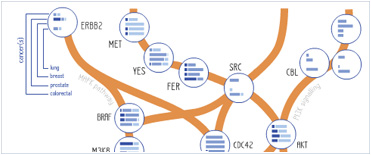








 Foundational characteristics of cancer include proliferation, angiogenesis, migration, evasion of apoptosis, and cellular immortality. Find key markers for these cellular processes and antibodies to detect them.
 The SUMOplot™ Analysis Program predicts and scores sumoylation sites in your protein. SUMOylation is a post-translational modification involved in various cellular processes, such as nuclear-cytosolic transport, transcriptional regulation, apoptosis, protein stability, response to stress, and progression through the cell cycle.
 The Autophagy Receptor Motif Plotter predicts and scores autophagy receptor binding sites in your protein. Identifying proteins connected to this pathway is critical to understanding the role of autophagy in physiological as well as pathological processes such as development, differentiation, neurodegenerative diseases, stress, infection, and cancer.
Goat Anti-ADAM12 Antibody
Peptide-affinity purified goat antibody
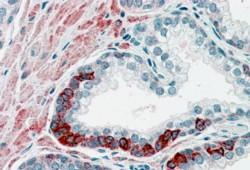
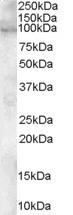
- SPECIFICATION
- CITATIONS: 1
- PROTOCOLS
- BACKGROUND

Application 
| WB, IHC, E |
|---|---|
| Primary Accession | O43184 |
| Other Accession | NP_067673, 8038 |
| Reactivity | Human |
| Host | Goat |
| Clonality | Polyclonal |
| Concentration | 0.5 mg/ml |
| Isotype | IgG |
| Calculated MW | 99542 Da |
| Gene ID | 8038 |
|---|---|
| Other Names | Disintegrin and metalloproteinase domain-containing protein 12, ADAM 12, 3.4.24.-, Meltrin-alpha, ADAM12, MLTN |
| Dilution | WB~~1:1000 IHC~~1:100~500 E~~N/A |
| Format | 0.5 mg IgG/ml in Tris saline (20mM Tris pH7.3, 150mM NaCl), 0.02% sodium azide, with 0.5% bovine serum albumin |
| Storage | Maintain refrigerated at 2-8°C for up to 6 months. For long term storage store at -20°C in small aliquots to prevent freeze-thaw cycles. |
| Precautions | Goat Anti-ADAM12 Antibody is for research use only and not for use in diagnostic or therapeutic procedures. |
| Name | ADAM12 |
|---|---|
| Synonyms | MLTN |
| Function | Involved in skeletal muscle regeneration, specifically at the onset of cell fusion. Also involved in macrophage-derived giant cells (MGC) and osteoclast formation from mononuclear precursors (By similarity). |
| Cellular Location | [Isoform 1]: Cell membrane; Single-pass type I membrane protein [Isoform 3]: Secreted. |
| Tissue Location | Isoform 1 is expressed in placenta and skeletal, cardiac, and smooth muscle. Isoform 2 seems to be expressed only in placenta or in embryo and fetus. Both forms were expressed in some tumor cells lines. Not detected in brain, lung, liver, kidney or pancreas |

Provided below are standard protocols that you may find useful for product applications.
Background
This gene encodes a member of the ADAM (a disintegrin and metalloprotease) protein family. Members of this family are membrane-anchored proteins structurally related to snake venom disintegrins, and have been implicated in a variety of biological processes involving cell-cell and cell-matrix interactions, including fertilization, muscle development, and neurogenesis. This gene has two alternatively spliced transcripts: a shorter secreted form and a longer membrane-bound form. The shorter form is found to stimulate myogenesis.
References
ADAM12 is an effective marker in the second trimester of pregnancy for prenatal screening of Down syndrome. Wang M, et al. Prenat Diagn, 2010 Jun. PMID 20509157. ADAM-12 stability in first trimester maternal serum. Cowans NJ, et al. Prenat Diagn, 2010 Jun. PMID 20509156. The role of SnoN in transforming growth factor beta1-induced expression of metalloprotease-disintegrin ADAM12. Solomon E, et al. J Biol Chem, 2010 Jul 16. PMID 20457602. Personalized smoking cessation: interactions between nicotine dose, dependence and quit-success genotype score. Rose JE, et al. Mol Med, 2010 Jul-Aug. PMID 20379614. Reduced density of ADAM 12-immunoreactive oligodendrocytes in the anterior cingulate white matter of patients with schizophrenia. Farkas N, et al. World J Biol Psychiatry, 2010 Apr. PMID 20218926.

If you have used an Abcepta product and would like to share how it has performed, please click on the "Submit Review" button and provide the requested information. Our staff will examine and post your review and contact you if needed.
If you have any additional inquiries please email technical services at tech@abcepta.com.

Ordering Information
Other Products
Shipping Information