














 Foundational characteristics of cancer include proliferation, angiogenesis, migration, evasion of apoptosis, and cellular immortality. Find key markers for these cellular processes and antibodies to detect them.
 The SUMOplot™ Analysis Program predicts and scores sumoylation sites in your protein. SUMOylation is a post-translational modification involved in various cellular processes, such as nuclear-cytosolic transport, transcriptional regulation, apoptosis, protein stability, response to stress, and progression through the cell cycle.
 The Autophagy Receptor Motif Plotter predicts and scores autophagy receptor binding sites in your protein. Identifying proteins connected to this pathway is critical to understanding the role of autophagy in physiological as well as pathological processes such as development, differentiation, neurodegenerative diseases, stress, infection, and cancer.
PPM1H Antibody
PPM1H Antibody, Clone 10D2
- SPECIFICATION
- CITATIONS
- PROTOCOLS
- BACKGROUND

| Primary Accession | Q9ULR3 |
|---|---|
| Other Accession | NP_065751.1 |
| Host | Mouse |
| Clonality | Monoclonal |
| Target/Specificity | PPM1H |
| Other Names | Protein phosphatase Mg2+/Mn2+ dependent 1H Antibody | NERPP2C | Protein phosphatase 1H Antibody |
| Clone Names | PPM1H |
| Immunogen | Recombinant Human PPM1H Protein |
| Purification | Protein G Purified |
| Storage | -20ºC |
| Storage Buffer | PBS pH 7.4, 50% glycerol, 0.09% sodium azide *Storage buffer may change when conjugated |
| Shipping Temperature | Blue Ice or 4ºC |
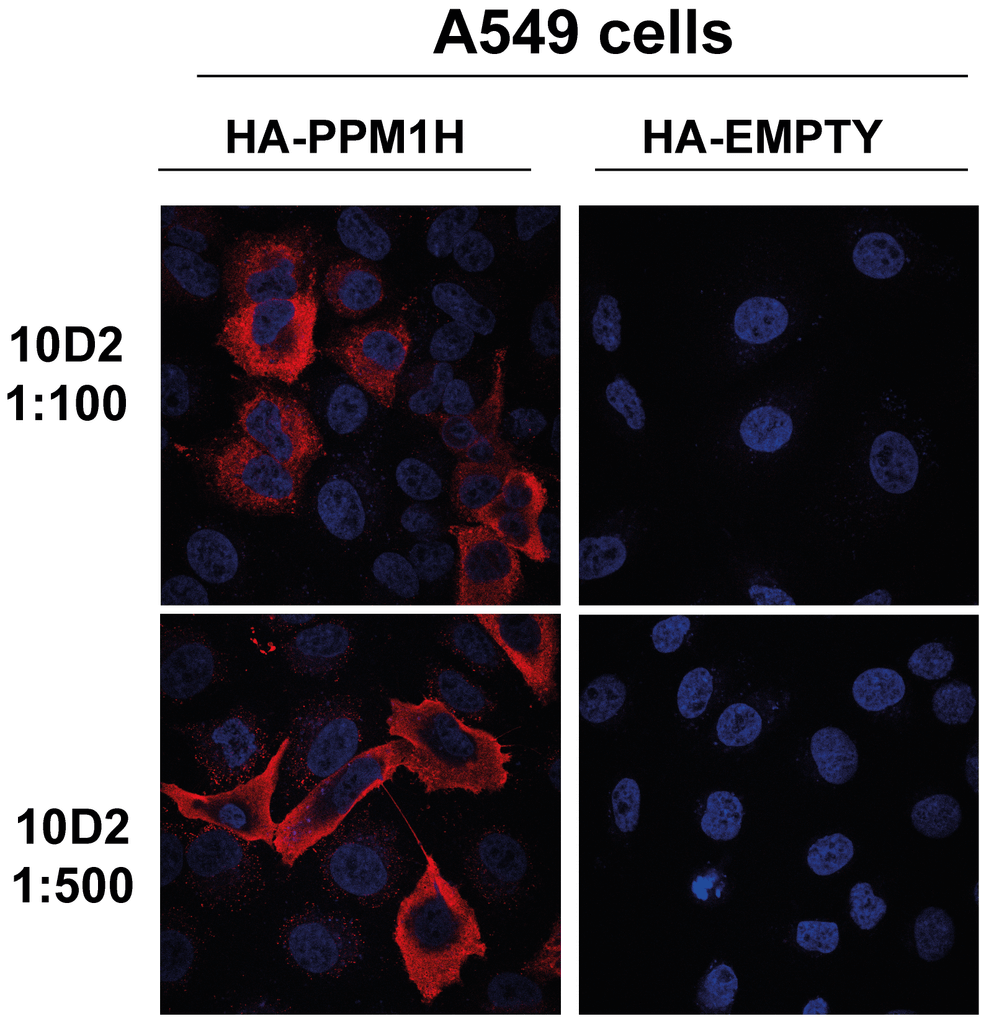
| Certificate of Analysis | A 1:1000 dilution of SMC-616 was sufficient for detection of PPM1H in 10 µg of Hu, Ms, Rt Kidney Cells (HEK293), Alveolar Basal Epithelial cells (A549) by ECL immunoblot analysis using Goat Anti-Mouse IgG:HRP as the secondary antibody. |
| Cellular Localization | Intracellular |

Thousands of laboratories across the world have published research that depended on the performance of antibodies from Abcepta to advance their research. Check out links to articles that cite our products in major peer-reviewed journals, organized by research category.
info@abcepta.com, and receive a free "I Love Antibodies" mug.

Provided below are standard protocols that you may find useful for product applications.
Background
PPM1H is an independent prognostic biomarker of non-small cell lung cancer (1). PPM1H acts as a key modulator of LRRK2 signaling by controlling dephosphorylation of Rab proteins (2). PPM1H is also suggested to be a gatekeeper to prevent excessive bone morphogenetic protein (BMP) signalling through dephosphorylation (3).
References
1. Zhang W.Q., et al. (2021) Neoplasma. 68(5): 917-923. 2. Berndsen K., et al. (2019) 8:e50416. 3.Shen T., et al. (2014) Cell Res. 24(6): 727-741.

If you have used an Abcepta product and would like to share how it has performed, please click on the "Submit Review" button and provide the requested information. Our staff will examine and post your review and contact you if needed.
If you have any additional inquiries please email technical services at tech@abcepta.com.

Ordering Information
Other Products
Shipping Information