






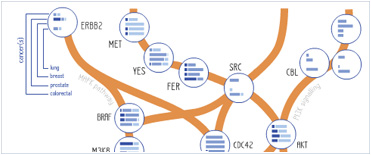






 Foundational characteristics of cancer include proliferation, angiogenesis, migration, evasion of apoptosis, and cellular immortality. Find key markers for these cellular processes and antibodies to detect them.
 The SUMOplot™ Analysis Program predicts and scores sumoylation sites in your protein. SUMOylation is a post-translational modification involved in various cellular processes, such as nuclear-cytosolic transport, transcriptional regulation, apoptosis, protein stability, response to stress, and progression through the cell cycle.
 The Autophagy Receptor Motif Plotter predicts and scores autophagy receptor binding sites in your protein. Identifying proteins connected to this pathway is critical to understanding the role of autophagy in physiological as well as pathological processes such as development, differentiation, neurodegenerative diseases, stress, infection, and cancer.
Anti-ALDOLASE [Rabbit Muscle] (GOAT) Antibody Peroxidase Conjugated
Aldolase Antibody Peroxidase Conjugated
- SPECIFICATION
- CITATIONS
- PROTOCOLS
- BACKGROUND

| Host | Goat |
|---|---|
| Conjugate | Peroxidase (Horseradish) |
| Target Species | Rabbit |
| Reactivity | Human, Rabbit |
| Clonality | Polyclonal |
Application 
| WB, E, IP, I, LCI |
| Application Note | Anti-Aldolase has been tested by ELISA, immunoprecipitation, and western blot. This product is assayed against 1.0 µg of Aldolase [Rabbit Muscle] in a standard capture ELISA using ABTS (2,2’-azino-bis-[3-ethylbenthiazoline-6-sulfonic acid]) code # ABTS-100 as a substrate for 30 minutes at room temperature. A working dilution of 1:1,000 to 1:2,000 of the reconstitution concentration is suggested for this product. |
| Physical State | Lyophilized |
| Buffer | 0.02 M Potassium Phosphate, 0.15 M Sodium Chloride, pH 7.2 |
| Immunogen | Aldolase [Rabbit Muscle] |
| Reconstitution Volume | 100 µL |
| Reconstitution Buffer | Restore with deionized water (or equivalent) |
| Stabilizer | 10 mg/mL Bovine Serum Albumin (BSA) - Immunoglobulin and Protease free |
| Preservative | 0.01% (w/v) Gentamicin Sulfate. Do NOT add Sodium Azide! |
| Gene ID | 100009055 |
|---|---|
| Other Names | 100009055 |
| Purity | Aldolase is an IgG fraction antibody purified from monospecific antiserum by a multi-step process which includes delipidation, salt fractionation and ion exchange chromatography followed by extensive dialysis against the buffer stated above. Assay by immunoelectrophoresis resulted in a single precipitin arc against anti-Peroxidase, anti-Goat Serum as well as purified and partially purified Aldolase [Rabbit Muscle]. |
| Storage Condition | Store vial at 4° C prior to restoration. For extended storage aliquot contents and freeze at -20° C or below. Avoid cycles of freezing and thawing. Centrifuge product if not completely clear after standing at room temperature. This product is stable for several weeks at 4° C as an undiluted liquid. Dilute only prior to immediate use. |
| Precautions Note | This product is for research use only and is not intended for therapeutic or diagnostic applications. |
| Name | ALDOA |
|---|---|
| Function | Catalyzes the reversible conversion of beta-D-fructose 1,6- bisphosphate (FBP) into two triose phosphate and plays a key role in glycolysis and gluconeogenesis (PubMed:17329259, PubMed:20129922). In addition, may also function as scaffolding protein (PubMed:17329259). |
| Cellular Location | Cytoplasm, myofibril, sarcomere, I band. Cytoplasm, myofibril, sarcomere, M line. Note=In skeletal muscle, accumulates around the M line and within the I band, colocalizing with FBP2 on both sides of the Z line in the absence of Ca(2+) |

Thousands of laboratories across the world have published research that depended on the performance of antibodies from Abcepta to advance their research. Check out links to articles that cite our products in major peer-reviewed journals, organized by research category.
info@abcepta.com, and receive a free "I Love Antibodies" mug.

Provided below are standard protocols that you may find useful for product applications.
Background
Aldolase is an enzyme that performs an aldol reaction (creating an aldol) or its reverse (cleaving an aldol). Aldolase plays a key role in glycolysis and gluconeogenesis. In addition, may also function as scaffolding protein. Belongs to the class I fructose-bisphosphate aldolase family.

If you have used an Abcepta product and would like to share how it has performed, please click on the "Submit Review" button and provide the requested information. Our staff will examine and post your review and contact you if needed.
If you have any additional inquiries please email technical services at tech@abcepta.com.


Ordering Information
Other Products
Shipping Information