





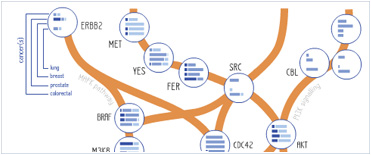








 Foundational characteristics of cancer include proliferation, angiogenesis, migration, evasion of apoptosis, and cellular immortality. Find key markers for these cellular processes and antibodies to detect them.
 The SUMOplot™ Analysis Program predicts and scores sumoylation sites in your protein. SUMOylation is a post-translational modification involved in various cellular processes, such as nuclear-cytosolic transport, transcriptional regulation, apoptosis, protein stability, response to stress, and progression through the cell cycle.
 The Autophagy Receptor Motif Plotter predicts and scores autophagy receptor binding sites in your protein. Identifying proteins connected to this pathway is critical to understanding the role of autophagy in physiological as well as pathological processes such as development, differentiation, neurodegenerative diseases, stress, infection, and cancer.
CSPG5 Antibody (monoclonal) (M01)
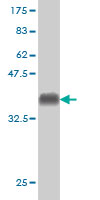
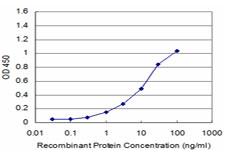
Mouse monoclonal antibody raised against a partial recombinant CSPG5.
- SPECIFICATION
- CITATIONS
- PROTOCOLS
- BACKGROUND

Application 
| WB, E |
|---|---|
| Primary Accession | O95196 |
| Other Accession | NM_006574 |
| Reactivity | Human |
| Host | mouse |
| Clonality | Monoclonal |
| Isotype | IgG1 Kappa |
| Clone Names | 5C11 |
| Calculated MW | 60016 Da |
| Gene ID | 10675 |
|---|---|
| Other Names | Chondroitin sulfate proteoglycan 5, Acidic leucine-rich EGF-like domain-containing brain protein, Neuroglycan C, CSPG5, CALEB, NGC |
| Target/Specificity | CSPG5 (NP_006565, 445 a.a. ~ 539 a.a) partial recombinant protein with GST tag. MW of the GST tag alone is 26 KDa. |
| Dilution | WB~~1:500~1000 E~~N/A |
| Format | Clear, colorless solution in phosphate buffered saline, pH 7.2 . |
| Storage | Store at -20°C or lower. Aliquot to avoid repeated freezing and thawing. |
| Precautions | CSPG5 Antibody (monoclonal) (M01) is for research use only and not for use in diagnostic or therapeutic procedures. |

Thousands of laboratories across the world have published research that depended on the performance of antibodies from Abcepta to advance their research. Check out links to articles that cite our products in major peer-reviewed journals, organized by research category.
info@abcepta.com, and receive a free "I Love Antibodies" mug.

Provided below are standard protocols that you may find useful for product applications.
References
Identification of neuroglycan C and interacting partners as potential susceptibility genes for schizophrenia in a Southern Chinese population. So HC, et al. Am J Med Genet B Neuropsychiatr Genet, 2010 Jan 5. PMID 19367581.Neuroglycan C is a novel midkine receptor involved in process elongation of oligodendroglial precursor-like cells. Ichihara-Tanaka K, et al. J Biol Chem, 2006 Oct 13. PMID 16901907.Expression and identification of a new splice variant of neuroglycan C, a transmembrane chondroitin sulfate proteoglycan, in the human brain. Aono S, et al. J Neurosci Res, 2006 Jan. PMID 16299773.Neuroglycan C, a novel member of the neuregulin family. Kinugasa Y, et al. Biochem Biophys Res Commun, 2004 Sep 3. PMID 15358134.CALEB/NGC interacts with the Golgi-associated protein PIST. Hassel B, et al. J Biol Chem, 2003 Oct 10. PMID 12885772.

If you have used an Abcepta product and would like to share how it has performed, please click on the "Submit Review" button and provide the requested information. Our staff will examine and post your review and contact you if needed.
If you have any additional inquiries please email technical services at tech@abcepta.com.

Ordering Information
Other Products
Shipping Information