







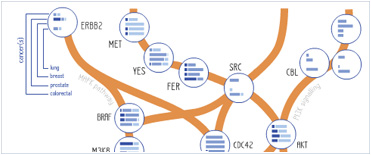








 Foundational characteristics of cancer include proliferation, angiogenesis, migration, evasion of apoptosis, and cellular immortality. Find key markers for these cellular processes and antibodies to detect them.
 The SUMOplot™ Analysis Program predicts and scores sumoylation sites in your protein. SUMOylation is a post-translational modification involved in various cellular processes, such as nuclear-cytosolic transport, transcriptional regulation, apoptosis, protein stability, response to stress, and progression through the cell cycle.
 The Autophagy Receptor Motif Plotter predicts and scores autophagy receptor binding sites in your protein. Identifying proteins connected to this pathway is critical to understanding the role of autophagy in physiological as well as pathological processes such as development, differentiation, neurodegenerative diseases, stress, infection, and cancer.
LDHB Antibody (monoclonal) (M01)
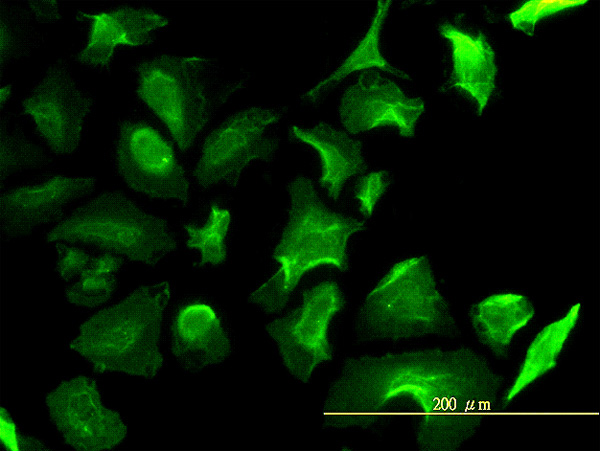
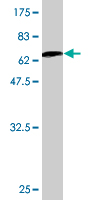
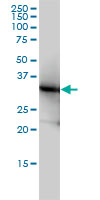
Mouse monoclonal antibody raised against a full length recombinant LDHB.
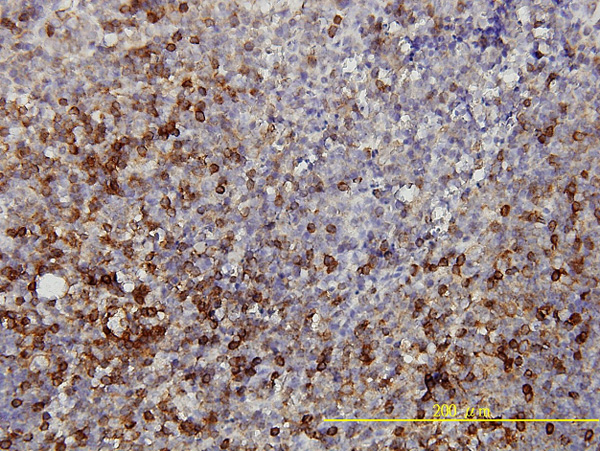
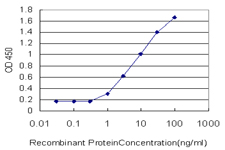
- SPECIFICATION
- CITATIONS: 1
- PROTOCOLS
- BACKGROUND

Application 
| WB, IHC, IF, E |
|---|---|
| Primary Accession | P07195 |
| Other Accession | BC002362 |
| Reactivity | Human |
| Host | mouse |
| Clonality | Monoclonal |
| Isotype | IgG1 kappa |
| Clone Names | 2H6 |
| Calculated MW | 36638 Da |
| Gene ID | 3945 |
|---|---|
| Other Names | L-lactate dehydrogenase B chain, LDH-B, LDH heart subunit, LDH-H, Renal carcinoma antigen NY-REN-46, LDHB |
| Target/Specificity | LDHB (AAH02362.1, 1 a.a. ~ 334 a.a) full-length recombinant protein with GST tag. MW of the GST tag alone is 26 KDa. |
| Dilution | WB~~1:500~1000 IHC~~1:100~500 IF~~1:50~200 E~~N/A |
| Format | Clear, colorless solution in phosphate buffered saline, pH 7.2 . |
| Storage | Store at -20°C or lower. Aliquot to avoid repeated freezing and thawing. |
| Precautions | LDHB Antibody (monoclonal) (M01) is for research use only and not for use in diagnostic or therapeutic procedures. |

Provided below are standard protocols that you may find useful for product applications.
Background
This gene encodes an enzyme which catalyzes the reversible conversion of lactate and pyruvate, and NAD and NADH, in the glycolytic pathway. Mutations in this gene are associated with lactate dehydrogenase B deficiency. Pseudogenes have been identified on the X chromosome and on chromosome. Multiple alternatively spliced variants, encoding the same protein, have been identified.
References
1.Pilot application of iTRAQ to the retinal disease Macular Telangiectasia.Len AC, Powner MB, Zhu L, Hageman GS, Song X, Fruttiger M, Gillies MC.J Proteome Res. 2011 Nov 21.2.Quantitative Proteomics Analysis Reveals BAG3 as a Potential Target to Suppress SARS-CoV Replication.Zhang L, Zhang ZP, Zhang XE, Lin FS, Ge F.J Virol. 2010 Apr 14. [Epub ahead of print]

If you have used an Abcepta product and would like to share how it has performed, please click on the "Submit Review" button and provide the requested information. Our staff will examine and post your review and contact you if needed.
If you have any additional inquiries please email technical services at tech@abcepta.com.

Ordering Information
Other Products
Shipping Information